Think Twice
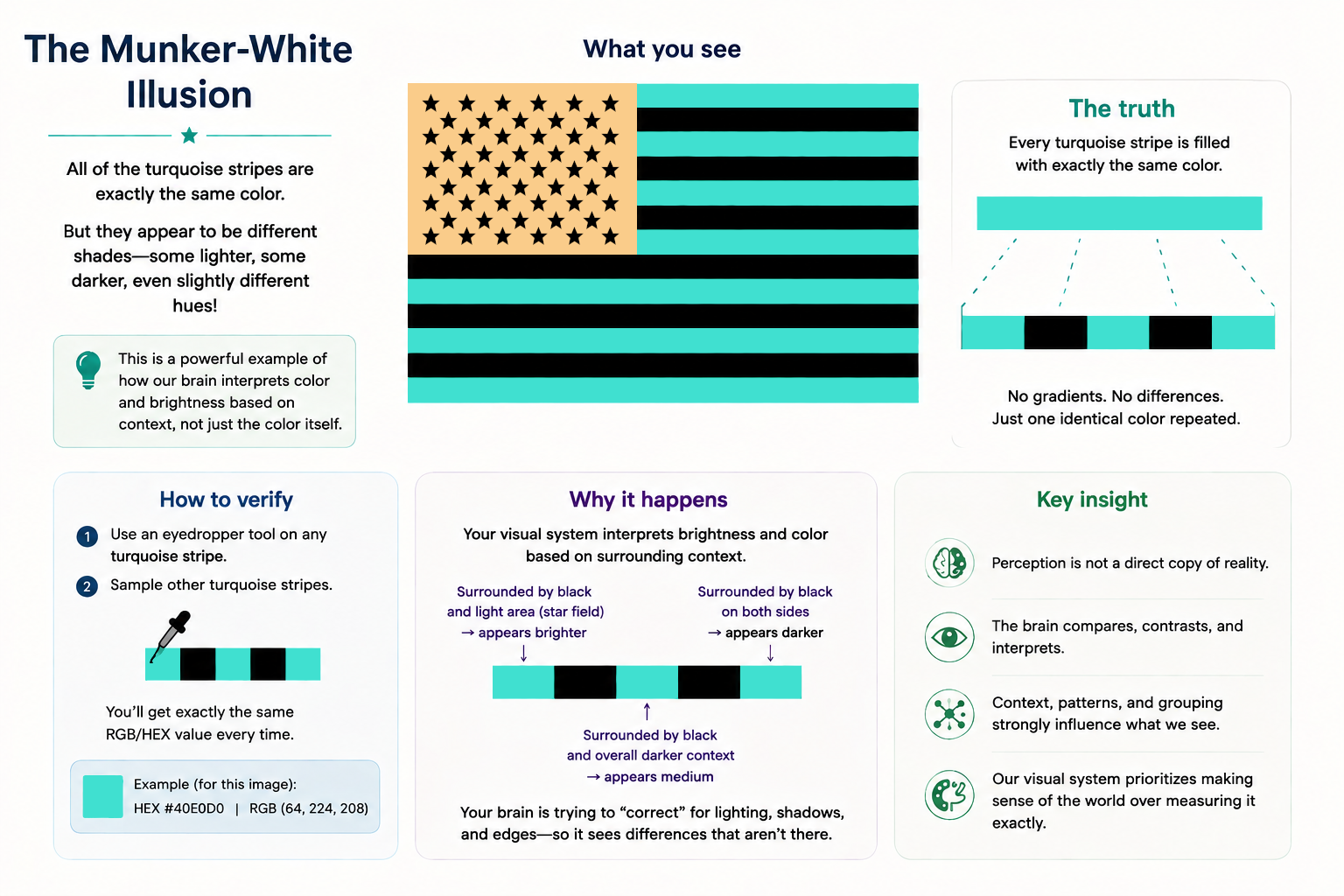
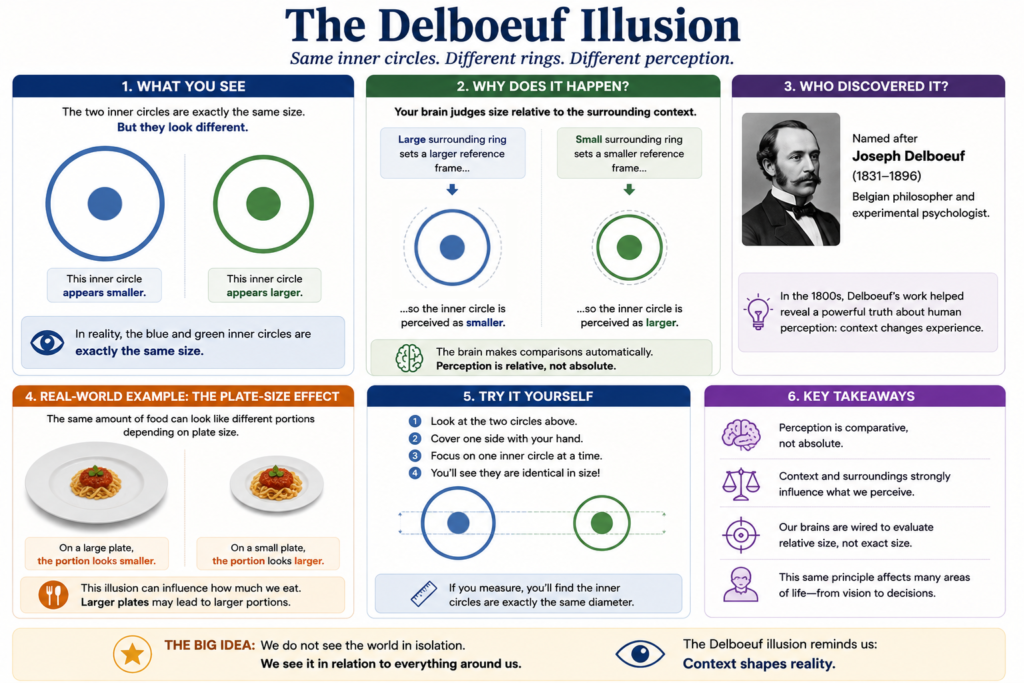
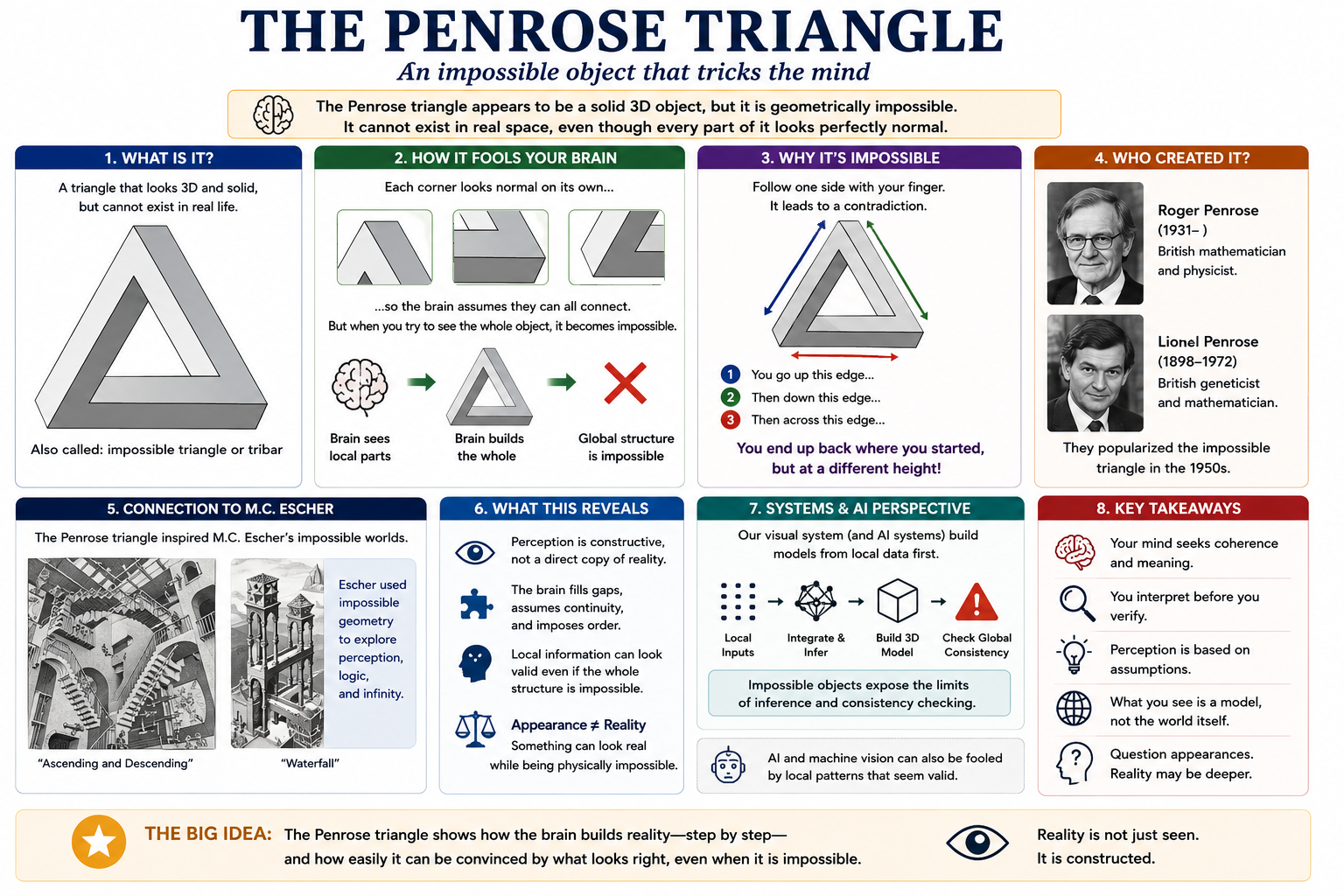
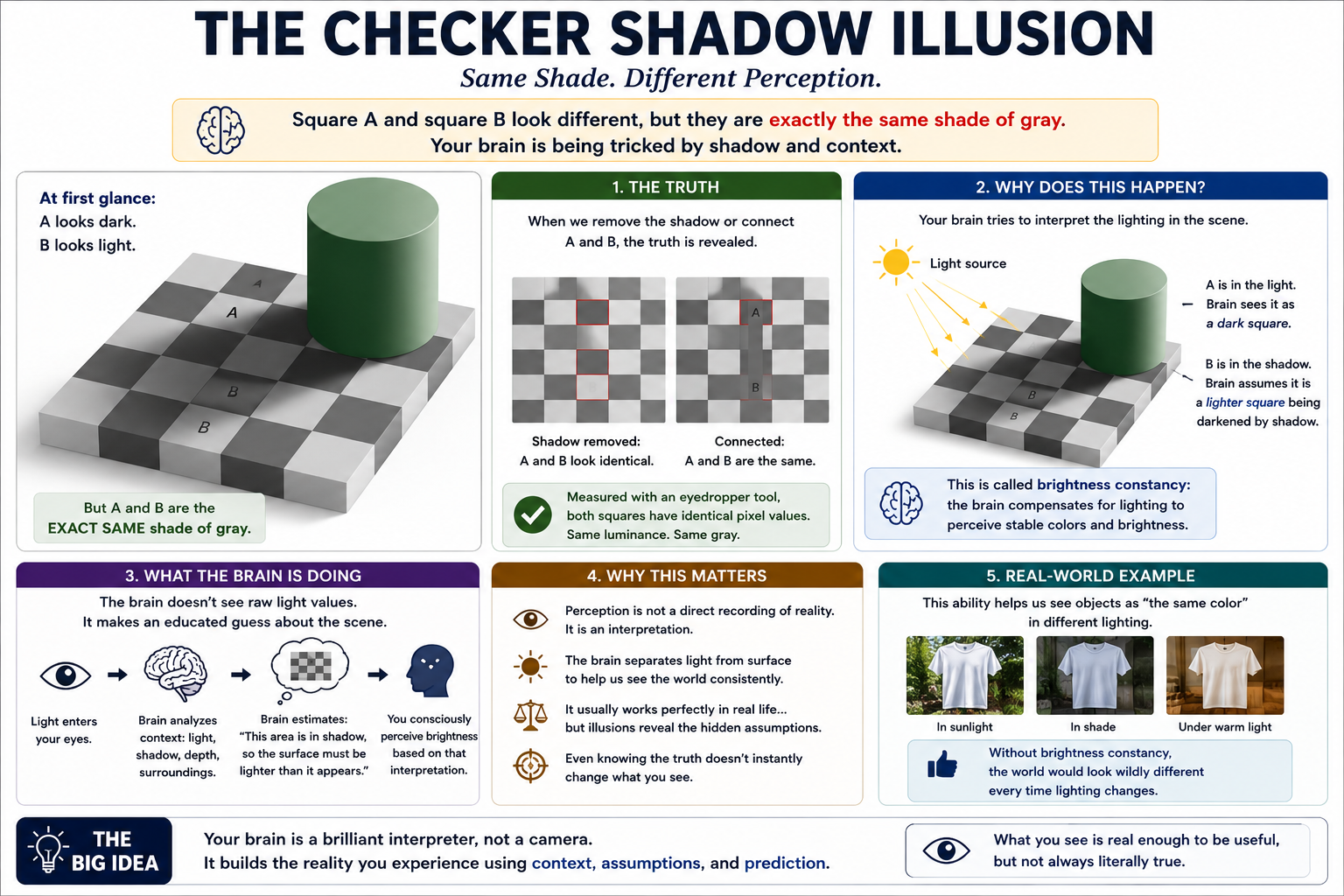
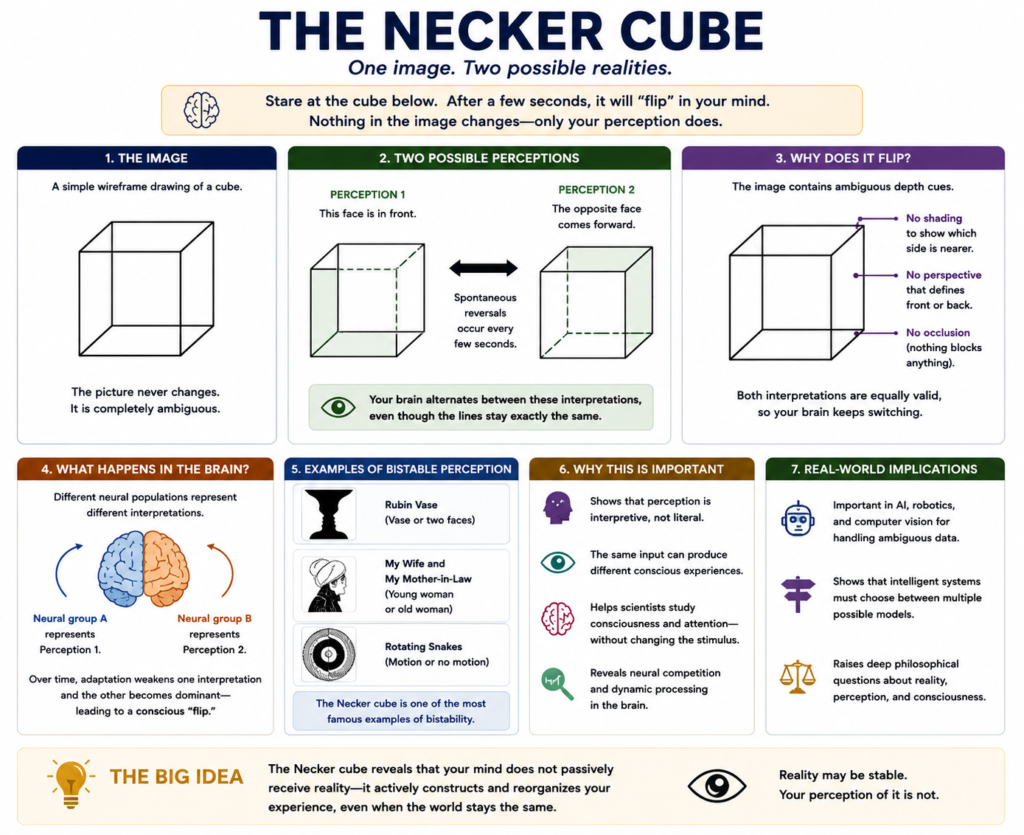
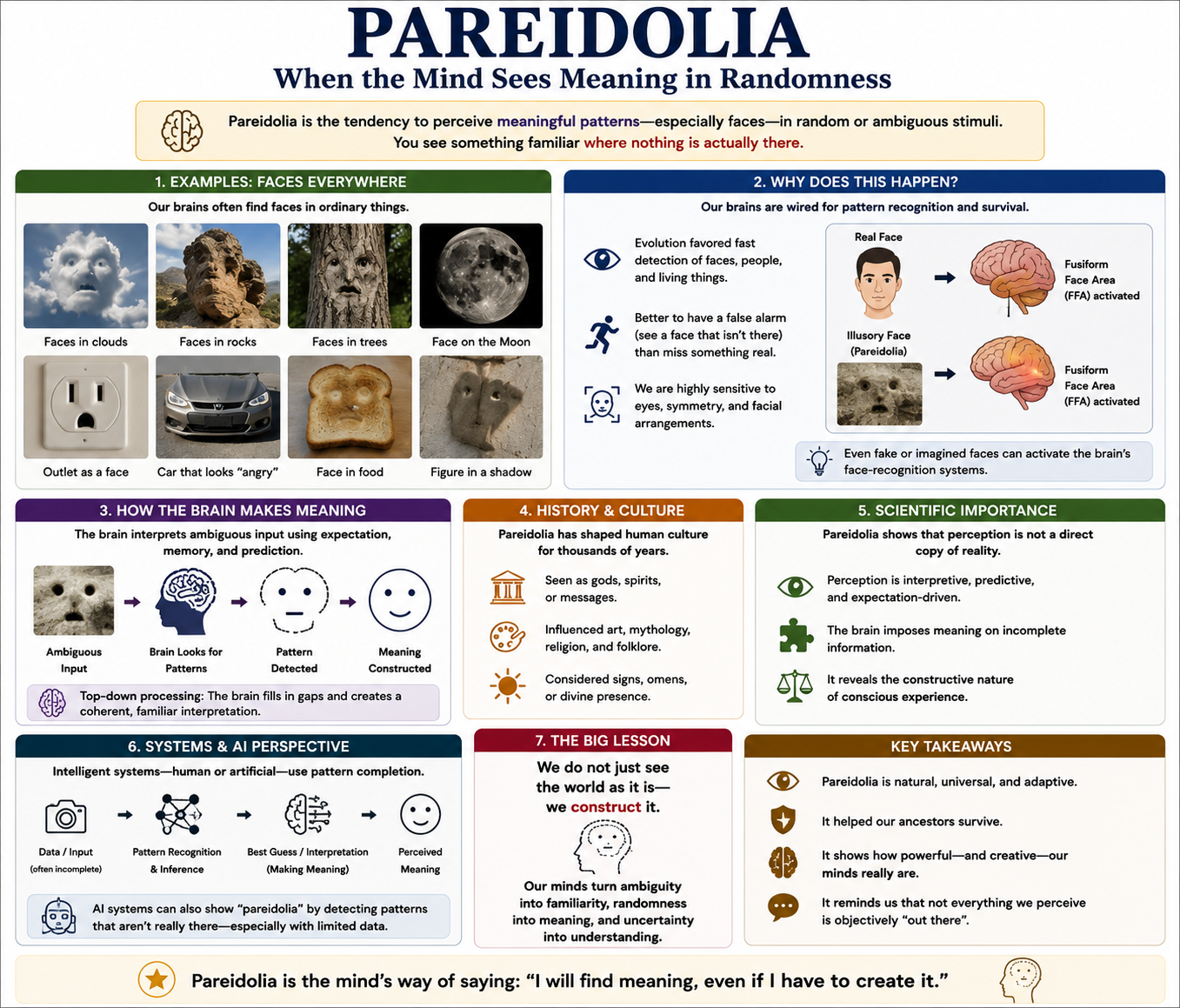
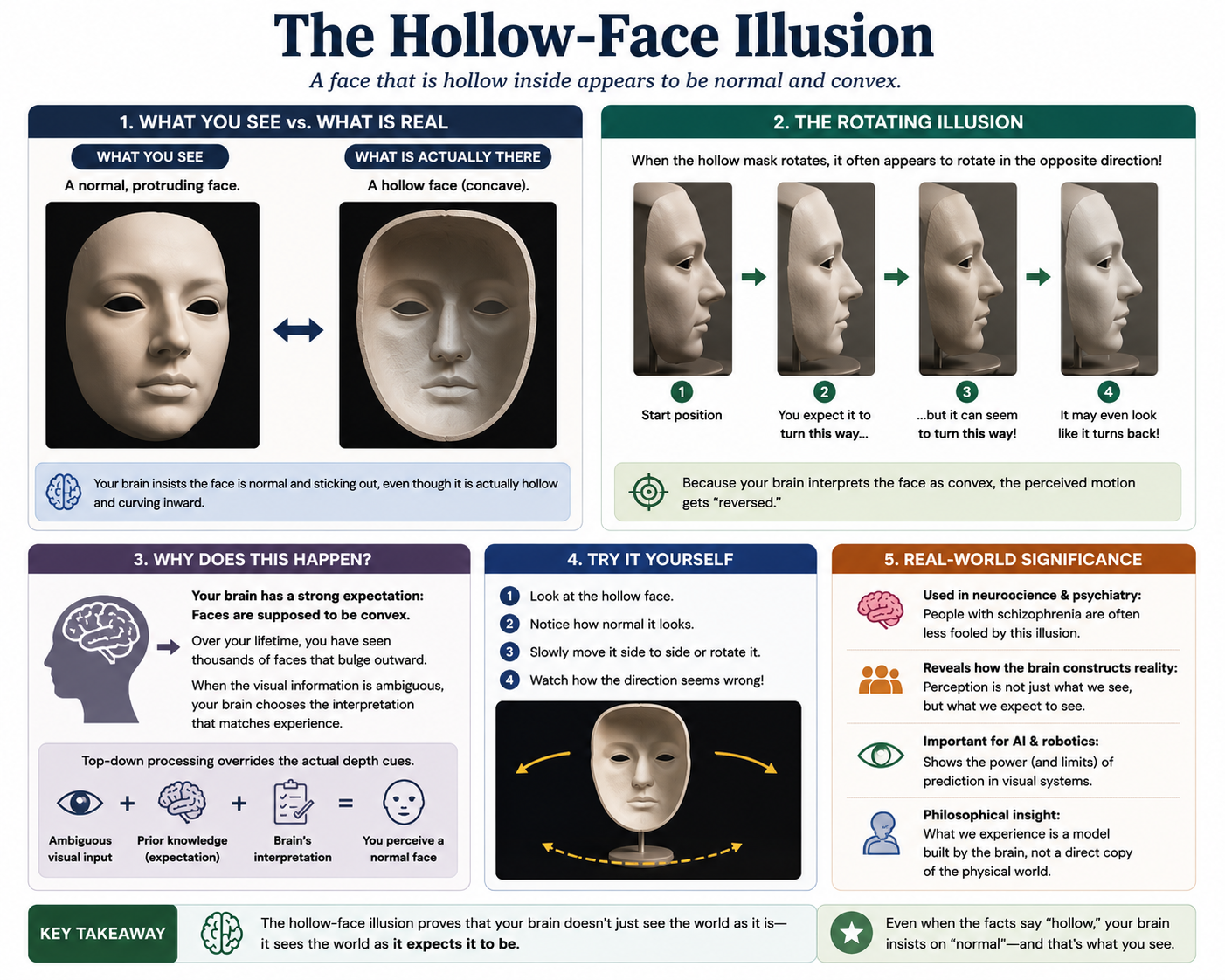
Optical illusions such as the Müller-Lyer illusion, Shepard tables illusion, Ebbinghaus illusion, and Munker-White illusion are profoundly important within Independent Integration Systems Engineering (XSE) because they reveal one of the deepest realities about the human system:
Human beings do not perceive reality directly.
They perceive the mind’s interpretation of reality.
Within XSE, this insight becomes foundational to understanding:
- the Mind aspect,
- the Mind Gateway,
- Human Factors Engineering,
- Investigative Skills,
- the XSE Vantage Point,
- entropy,
- truth-seeking,
- and the necessity of integrity-based systems calibration.
At first glance, optical illusions may appear to be little more than entertaining visual tricks. Yet within psychology, neuroscience, cognitive science, systems engineering, and XSE, these illusions represent something far more significant:
They expose the active, interpretive, predictive, and imperfect nature of human perception itself.
For centuries, many people implicitly assumed perception worked similarly to a camera:
- the eyes captured objective reality,
- and the brain simply displayed it accurately.
Optical illusions shattered that assumption.
Instead, these phenomena revealed that the human mind continuously:
- predicts,
- compares,
- filters,
- interprets,
- fills gaps,
- constructs meaning,
- and models reality from incomplete information.
Within XSE, this becomes critically important because the human system operates largely through interpreted models of reality rather than direct access to reality itself.
Thus, illusions become powerful demonstrations of why:
- systems awareness,
- investigation,
- perspective,
- humility,
- and truth-seeking
are essential for human flourishing and accurate systems operation.
Optical Illusions and the Mind
Within XSE, the Mind is one of the three foundational aspects of the human system alongside the Body and Spirit.
The mind is not treated as a passive recording device, but as an active cognitive subsystem continuously engaged in:
- interpretation,
- prediction,
- abstraction,
- prioritization,
- and environmental modeling.
Optical illusions vividly demonstrate this process.
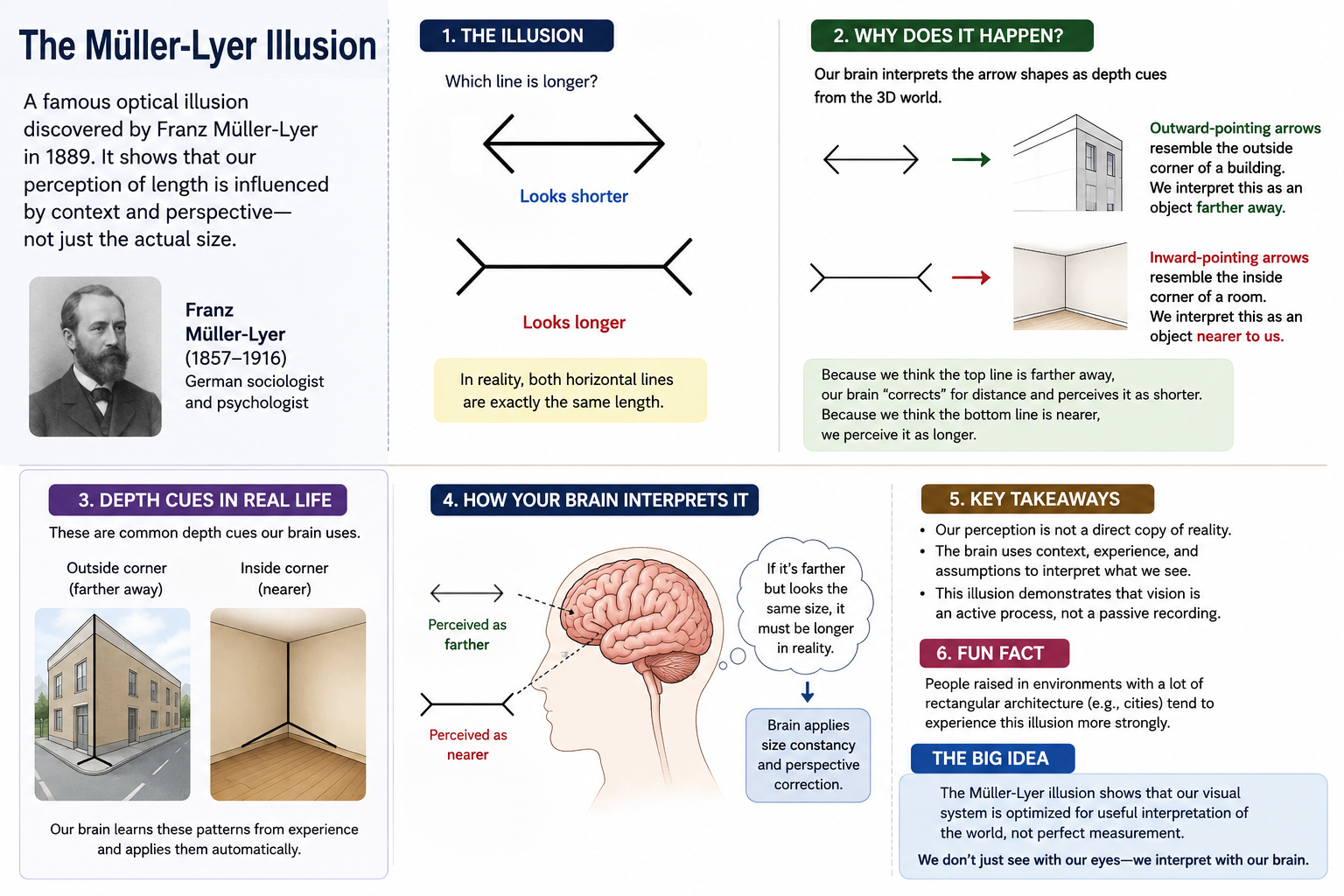
The Müller-Lyer illusion reveals that the mind automatically infers depth and perspective, even when those inferences distort objective measurement.
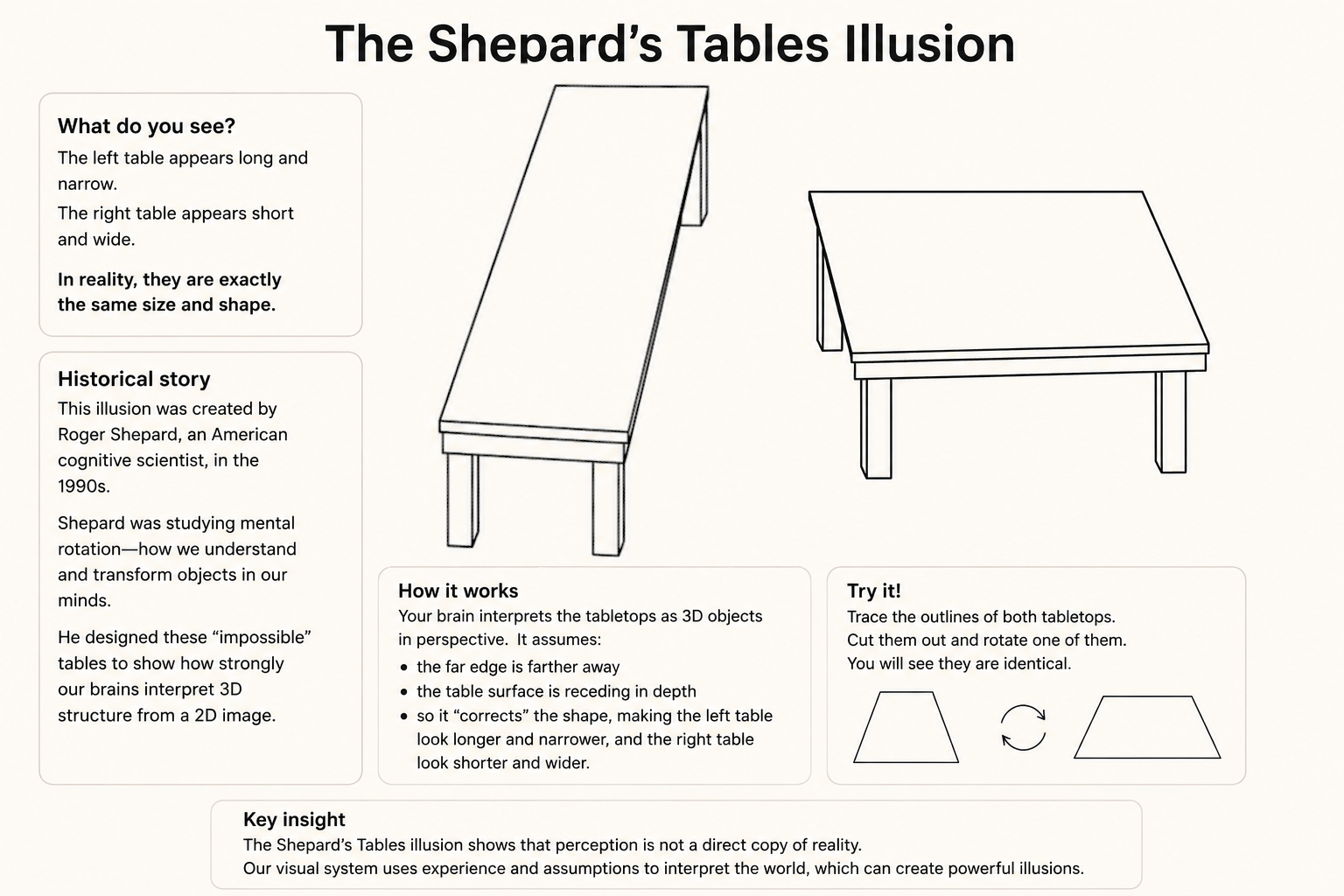
The Shepard tables illusion demonstrates that inferred three-dimensional structure strongly influences perceived shape and proportion.
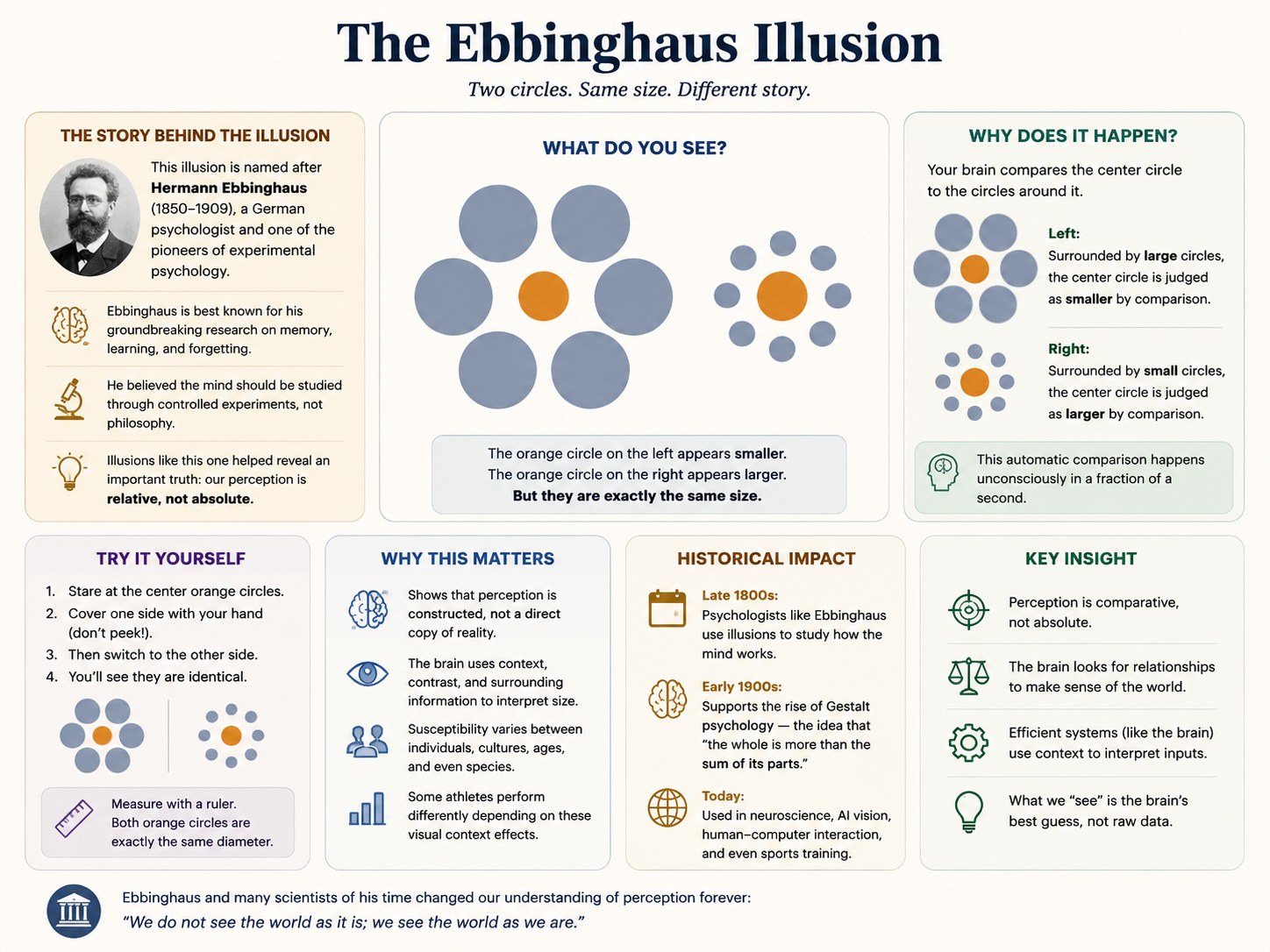
The Ebbinghaus illusion shows that perception is comparative rather than absolute.
The Munker-White illusion demonstrates that brightness and color perception depend heavily upon surrounding context and perceptual grouping.
Together, these illusions reveal a core XSE principle: Perception is not passive reception.
It is active construction.
This insight aligns deeply with the X Axiom:
“Using critical & creative thinking augments intelligence.”
Because perception itself can distort reality, intelligence requires more than automatic interpretation.
It requires:
- investigation,
- reflection,
- calibration,
- and critical analysis.
The Mind Gateway & Perceptual Filtering
Within XSE, the Mind Gateway represents the interface through which informational inputs enter and influence the human system.
Optical illusions reveal that this gateway is not perfectly objective.
Inputs are filtered through:
- prior assumptions,
- environmental context,
- neurological heuristics,
- pattern recognition systems,
- attentional limitations,
- and predictive processing mechanisms.
Thus, the human system continuously operates through interpreted reality models rather than purely objective perception.
This becomes profoundly important in the cyber age, where informational environments increasingly shape:
- beliefs,
- identity,
- emotion,
- attention,
- and worldview.
Modern systems often exploit perceptual vulnerabilities through:
- persuasive design,
- media framing,
- deepfakes,
- algorithmic manipulation,
- outrage amplification,
- and engineered comparison systems.
Thus, XSE strongly emphasizes intentional systems awareness and cognitive investigation.
Human Factors Engineering & Optical Illusions
Human factors engineering recognizes that human operators are not perfectly objective processors of reality.
Perceptual systems contain:
- limitations,
- biases,
- heuristics,
- attentional constraints,
- and interpretation vulnerabilities.
This has enormous implications for:
- aviation,
- military systems,
- interface design,
- transportation,
- safety systems,
- architecture,
- ergonomics,
- and human-machine interaction.
For example:
- pilots may experience spatial disorientation,
- operators may misinterpret instrument layouts,
- drivers may misjudge distance and speed,
- and interface users may overlook critical information due to perceptual grouping effects.
Thus, systems engineering must account for actual human perception rather than idealized assumptions about cognition.
XSE extends this principle beyond technology into human life itself.
Optical Illusions & Investigative Skills
Within XSE, optical illusions become valuable training tools for Investigative Skills because they demonstrate operationally that:
appearances are not always identical to reality.
A person may consciously know the Shepard tables are identical in size and shape, yet still perceive them differently.
This reveals that much of cognition operates automatically beneath conscious awareness.
Thus, illusions train:
- humility,
- verification,
- skepticism toward assumptions,
- perspective expansion,
- and disciplined investigation.
The Investigative Systems Engineer recognizes:
- first impressions may be incomplete,
- perception may distort reality,
- and systems often contain hidden variables requiring deeper analysis.
This directly supports XSE’s truth-seeking orientation.
Truth & Integrity in XSE
Optical illusions strongly reinforce one of the deepest principles within XSE:
Reality exists independently of perception.
Perception may distort.
Interpretation may fail.
Context may mislead.
Emotion may bias.
But objective reality itself remains unchanged.
Thus, XSE places extraordinary importance on truth-seeking.
The Alpha Axiom states:
“Integrity is founded on truth.”
Within systems engineering, systems cannot operate optimally if based on false assumptions.
An engineer who ignores accurate measurements creates unstable systems.
Likewise, human beings operating from distorted perceptions may:
- make destructive decisions,
- pursue false goals,
- misunderstand themselves,
- or drift toward unhealthy trajectories.
Thus, optical illusions become symbolic demonstrations of why:
- investigation,
- feedback,
- calibration,
- humility,
- and integrity
are essential within XSE.
Context, Comparison, & Human Self-Perception
The Ebbinghaus illusion demonstrates that perception is relational rather than absolute.
The exact same circle appears larger or smaller depending upon surrounding circles.
Within XSE, this principle extends far beyond vision into human psychology and systems behavior.
People often evaluate themselves comparatively rather than objectively:
- success relative to peers,
- attractiveness relative to media standards,
- wealth relative to society,
- suffering relative to surrounding expectations.
Thus, environments strongly shape self-perception.
Modern digital systems intensify this effect through constant exposure to:
- curated lifestyles,
- filtered images,
- achievement comparison,
- and social metrics.
XSE recognizes that these contextual systems can distort:
- identity,
- self-worth,
- expectations,
- and emotional regulation.
Thus, systems awareness becomes increasingly necessary for maintaining coherent self-understanding.
Predictive Processing & Systems Engineering
Modern neuroscience increasingly understands the brain as a predictive engine.
Rather than merely reacting to sensory input, the mind continuously:
- generates models,
- predicts outcomes,
- interprets incomplete information,
- and updates internal representations based on feedback.
Optical illusions reveal moments where predictive models conflict with objective measurement.
Within XSE, this aligns strongly with systems engineering concepts involving:
- modeling,
- feedback loops,
- prediction,
- adaptation,
- and iterative calibration.
Human beings continuously operate through internal models of reality.
Optical Illusions & Entropy
Within XSE, entropy refers to the tendency of systems toward:
- disorder,
- fragmentation,
- distortion,
- confusion,
- and destabilization.
Optical illusions demonstrate how easily perception itself may become distorted.
Without:
- reflection,
- investigation,
- perspective,
- feedback,
- and truth-seeking,
human systems may drift increasingly toward cognitive entropy.
Thus, illusions become anti-entropic educational tools because they expose:
- the limitations of perception,
- the vulnerability of assumptions,
- and the necessity of ongoing systems calibration.
The XSE Vantage Point
Optical illusions strongly reinforce the concept of:
XSE Vantage Point
Many illusions change dramatically depending upon:
- perspective,
- angle,
- framing,
- context,
- scale,
- or environmental conditions.
Likewise, systems behavior often appears radically different depending on observational position.
Thus, XSE encourages expanding perspective beyond immediate appearances.
This helps reduce:
- impulsive interpretation,
- rigid thinking,
- cognitive tunnel vision,
- and overconfidence.
Perspective expansion improves systems understanding.
Luxxacation and Optical Illusions
Optical illusions also translate naturally through Luxxacation:
| Luxxacation Element | Illusion Translation |
|---|---|
| Take Time | Pause and investigate beyond appearances |
| Build Strength | Develop discernment and critical thinking |
| Rise Above | Gain deeper systems awareness and perspective |
The process of Luxxacation itself becomes partially a process of:
moving beyond illusion toward greater alignment with reality.
The Deeper XSE Meaning of Optical Illusions
Perhaps the deepest lesson optical illusions teach within XSE is this:
Human beings are interpretive systems, not perfectly objective observers.
This does not mean reality is unreal.
Nor does it mean truth is unattainable.
Rather, it means human beings interact with reality through:
- perceptual systems,
- cognitive models,
- assumptions,
- memories,
- emotions,
- context,
- and interpretation frameworks.
Thus, XSE strongly emphasizes:
- truth-seeking,
- investigation,
- systems awareness,
- integrity,
- humility,
- and iterative recalibration toward reality.
Because systems flourish only when aligned with what is true.
Conclusion
Within Independent Integration Systems Engineering (XSE), optical illusions are far more than visual curiosities.
They are profound demonstrations of:
- the interpretive nature of perception,
- the limitations of cognition,
- the importance of perspective,
- the influence of context,
- and the necessity of truth-seeking.
Illusions reveal that the human mind continuously:
- predicts,
- compares,
- filters,
- constructs,
- and interprets reality rather than merely recording it passively.
This insight strongly connects to:
- the Mind aspect,
- the Mind Gateway,
- Human Factors Engineering,
- Investigative Skills,
- the XSE Vantage Point,
- entropy resistance,
- and integrity-based systems calibration.
Ultimately, optical illusions reinforce one of the deepest principles within XSE:
Things are not always as they seem.
Therefore, human flourishing requires:
- humility,
- investigation,
- perspective,
- critical thinking,
- and continual recalibration toward truth and reality.
Because within XSE:
integrity is founded on truth,
and systems flourish only when aligned with reality itself.