

X or Independent Integration of XSE
Within the XSE framework, Independent Integration may be understood operationally through the Derived Dynamic of Integrity. Integrity represents a progressively developing system-level condition of coherence, alignment, ordered consistency, and integrative unity of the Mind, Body, and Spirit within the human system in accordance with objective truth, the good, legitimate obligations, constructive Trajectory, and sustained aligned action over time.
Within XSE, Mind, Body, and Spirit are distinguishable, interrelated analytical Aspects of the Human that provide complementary perspectives for analysis of the integrated human person. They are considered in relation to one another rather than as isolated independent systems. These categories provide XSE with distinct ways of examining human functioning without implying that the person is composed of three independent substances or is reducible to any single aspect. The person is not reducible to any single thought, emotion, behavior, function, measurement, or Output. Independent Integration concerns the progressive coordination and proper ordering of these aspects within the unity of the whole person.
Within this framework, Independent Integration refers to increasing internal coherence, responsible self-direction, and coordinated functioning within the human system. It does not imply metaphysical self-sufficiency, complete independence from external relationships or conditions, or freedom from legitimate obligations, dependencies, or limitations.
Integrity therefore extends beyond honesty, reputation, outward morality, behavioral consistency, or isolated ethical conduct. A person may demonstrate strong consistency while remaining aligned with error, disorder, falsehood, harmful conditioning, or a destructive Trajectory. Within XSE, genuine Integrity requires that increasing internal coherence remain oriented toward what is true and objectively good, while respecting legitimate moral, relational, professional, and situational obligations within Current Reality.
An increasingly integrated individual develops greater congruence among such elements as:
- reasoning and beliefs,
- attention and behavior,
- values and choices,
- emotions and convictions,
- words and actions,
- commitments and follow-through,
- recognized responsibilities and lived conduct,
- and long-term Trajectory and recognized purpose.
Integrity is not a fixed state. As a Derived Dynamic, it may be strengthened, weakened, stabilized, degraded, restored, or progressively developed through recursive interaction among the Actual and Analytical Factors affecting the human system.
As this ordered alignment develops, it may support greater:
- resilience,
- disciplined choice,
- attentional stability,
- operational consistency,
- adaptive capacity,
- responsible exercise of freedom,
- and long-term Trajectory coherence.
These outcomes are not automatic or guaranteed. They depend upon the interaction of the person, circumstances, choices, environmental conditions, responsibilities, available knowledge, and other relevant Factors within the System of Context.
Mind: Reasoning, Thought, Perception, and Attention
Within XSE, the Mind is one of the three Aspects of the Human and, within XSE analysis, concerns functions and processes such as:
- reasoning,
- thought,
- perception,
- attention,
- interpretation,
- learning,
- belief formation,
- judgment,
- and cognitive processing.
Integrity within the Mind concerns increasing coherence among:
- reasoning,
- beliefs,
- values,
- attentional focus,
- interpretation,
- judgment,
- and decision-making.
A person developing greater Integrity of Mind increasingly seeks truthful understanding, exercises critical and creative thinking, remains responsive to evidence, and attempts to align beliefs and judgments with Current Reality rather than forcing reality to conform to a preferred internal model.
This includes willingness to correct assumptions when better information becomes available. Within XSE, changing one’s mind in response to truth or stronger evidence is not necessarily inconsistency; it may represent an increase in Integrity when the correction produces greater alignment with reality.
Disintegration within the Mind may involve patterns such as:
- unresolved contradiction,
- self-deception,
- fragmented reasoning,
- persistent attentional distraction,
- distorted interpretation,
- poorly examined assumptions,
- destabilizing conditioning,
- or continued conflict between recognized truth and reinforced patterns of thought.
Strengthening Integrity of Mind may support:
- clearer judgment,
- improved attentional governance,
- more accurate model formation,
- stronger Gateway Guarding,
- constructive decision-making,
- and more coherent Trajectory development.
Body: Embodiment, Action, Habit, and Physical Implementation
Within XSE, the Body is one of the three Aspects of the Human and, within XSE analysis, concerns the embodied expression and physical implementation of whole-person choices, intentions, habits, and conduct. It includes such matters as:
- physical action,
- behavioral habits,
- verbal expression,
- embodied implementation,
- physiological functioning,
- behavioral reinforcement,
- and interaction with the physical environment.
XSE does not treat voluntary human action as originating from the Body independently of the rest of the person. Rather, this aspect provides a perspective for examining how the person’s understanding, intentions, choices, commitments, and values become embodied in action and behavior.
Integrity within the Body concerns increasing consistency among:
- words and actions,
- commitments and follow-through,
- intentions and implementation,
- behavioral patterns and recognized values,
- and physical conduct and legitimate responsibilities.
A person developing greater Integrity in this aspect increasingly demonstrates such characteristics as:
- accountability,
- reliability,
- disciplined action,
- constructive habit formation,
- appropriate self-regulation,
- and increasing congruence between stated convictions and lived behavior.
Repeated contradictions between recognized good and reinforced behavior may contribute to fragmentation within the broader human system. Likewise, actions repeatedly practiced over time can strengthen particular patterns of conditioning, whether constructive or destructive.
Constructive behavioral reinforcement may therefore contribute to:
- greater operational stability,
- stronger follow-through,
- adaptive consistency,
- increased resilience,
- improved Trajectory coherence,
- and greater integration between intention and action.
Integrity of the Body does not require flawless behavioral performance. Error, fatigue, limitation, suffering, disrupted circumstances, or failure may occur without eliminating Integrity. What matters is whether the person continues to recognize contradiction, make appropriate corrections, and progressively bring behavior into better alignment with truth, the good, legitimate obligations, and constructive direction.
Spirit: Values, Meaning, Conscience, Conviction, and Direction
Within XSE, the Spirit is one of the three Aspects of the Human and, within XSE analysis, provides a perspective on the person’s deeper orientational life, including matters such as:
- values,
- meaning,
- conscience-sensitive judgment,
- identity,
- emotional weighting,
- convictions,
- attachments,
- purpose,
- hope,
- and deeper orientational direction.
These categories describe areas of analysis within XSE; they are not intended as an exhaustive definition of the spiritual dimension of the human person or as a claim that the functions listed above fully constitute or explain the human spirit.
Integrity within XSE’s Spirit aspect concerns increasing harmony among:
- values,
- convictions,
- emotional attachments,
- conscience-sensitive judgment,
- meaning orientation,
- recognized good,
- and long-term direction.
A person developing greater Integrity within this aspect increasingly seeks to order choices, attachments, and aspirations toward truth, what is genuinely good, legitimate responsibilities, and constructive purpose.
This may involve greater:
- sincerity,
- authenticity,
- motivational coherence,
- appropriately ordered priorities,
- stability of purpose,
- resilience,
- responsible freedom,
- and long-term directional consistency.
Disintegration within this aspect may involve:
- contradictory attachments,
- disordered priorities,
- unstable or conflicting value structures,
- fragmented identity,
- persistent conflict between conviction and action,
- meaning instability,
- or reinforcement of a Trajectory contrary to recognized truth or good.
Integrity within the Spirit aspect does not mean the absence of emotional conflict, uncertainty, temptation, grief, fear, or difficulty. Internal struggle may coexist with substantial Integrity. The relevant question within XSE is whether the person is progressively becoming more truthfully ordered and less fragmented through the manner in which those struggles are understood, evaluated, and acted upon.
Integrity as Operational Congruence
Within XSE, one important expression of Integrity is operational congruence.
Operational congruence describes the degree to which a person’s:
- understanding,
- beliefs,
- values,
- attention,
- emotions,
- choices,
- words,
- behavior,
- responsibilities,
- and Trajectory
function in increasingly coherent and properly ordered relationship rather than persistent contradiction or fragmentation.
Operational congruence alone, however, is not sufficient to establish Integrity.
A person could be internally consistent while operating from false assumptions, destructive values, exploitative objectives, or a harmful Trajectory. For this reason, XSE does not define Integrity merely as internal agreement. Genuine Integrity requires that coherence itself remain oriented toward objective truth, the good, legitimate obligations, and Current Reality.
For example, a person may intellectually recognize a behavior as harmful, irresponsible, or inconsistent with a legitimate commitment while repeatedly reinforcing that same pattern. Within XSE, the resulting contradiction may represent a form of operational disintegration because recognized understanding, behavioral reinforcement, and Trajectory are moving in conflicting directions.
Conversely, when a person recognizes such contradiction, seeks truthful understanding, corrects an inaccurate model, modifies behavior, and progressively brings action into better alignment with legitimate responsibilities and constructive direction, the process may represent a strengthening of Integrity.
Thus, increasing Integrity involves not simply “being consistent,” but becoming increasingly:
- coherent,
- truth-oriented,
- properly ordered,
- reality-responsive,
- responsibly adaptive,
- and capable of sustained constructive action.
Integrity, Freedom, and Constructive Action
Within XSE, Integrity is closely related to the responsible exercise of Freedom.
Freedom is not treated merely as the ability to act without restraint. Greater functional freedom also depends upon the capacity to make and sustain choices that are not dominated by fragmentation, contradiction, destructive conditioning, falsehood, or uncontrolled external influence.
Increasing Integrity may therefore strengthen a person’s capacity for:
- intentional action,
- disciplined choice,
- attentional governance,
- responsible adaptation,
- sustained constructive behavior,
- fulfillment of legitimate obligations,
- resistance to degrading conditioning,
- and preservation of constructive Trajectory.
It may also help a person recognize and respond more effectively to:
- manipulative environmental influences,
- compulsive reinforcement patterns,
- attentional fragmentation,
- conflicting priorities,
- deteriorating habits,
- and Trajectory drift.
Because the individual exists within broader systems, Integrity also has implications beyond the Individual Sphere of Integration.
Increasing Integrity may contribute constructively within:
- Family / Home,
- Professional / Business,
- Community / Local,
- National / Country,
- Global / World,
- and Cyber / Beyond environments.
A person whose words, commitments, decisions, and actions increasingly correspond with truth and legitimate responsibility may contribute to greater:
- trust,
- accountability,
- reliability,
- constructive leadership,
- relational stability,
- and systems coherence.
Integrity therefore has both internal and relational significance. The human system becomes more integrated internally while simultaneously becoming better able to interact constructively with surrounding systems.
Integrity as a Dynamic Foundation for Human Advancement
Within XSE, Integrity functions as a foundational integrative and anti-fragmentational Derived Dynamic within the human system.
It is not a claim of perfection, complete self-mastery, metaphysical self-sufficiency, or immunity from error. Rather, Integrity describes the degree to which the person is becoming:
- more truthfully ordered,
- more internally integrated,
- less fragmented,
- more responsive to Current Reality,
- more consistent in legitimate responsibilities,
- and more capable of sustaining constructive action over time.
Increasing Integrity may support the progressive development of:
- resilience,
- disciplined choice,
- attentional stability,
- adaptive consistency,
- responsible freedom,
- operational coherence,
- and constructive Trajectory alignment.
Conversely, persistent fragmentation, falsehood, contradictory reinforcement, disordered priorities, harmful conditioning, or sustained conflict between recognized truth and lived action may progressively weaken the coherence of the human system.
Importantly, Integrity requires adaptability to truth rather than rigid consistency with prior assumptions. When new evidence, changing circumstances, corrected understanding, or legitimate obligations reveal that an earlier model or course of action was mistaken, maintaining Integrity may require revision and corrective action. Such adaptation can strengthen rather than weaken Integrity when it produces greater alignment with truth and Current Reality.
Within XSE, Integrity also provides the foundation for True & Optimal Strength. Strength obtained or exercised through falsehood, exploitation, disorder, contradiction, destructive means, or opposition to objective good cannot qualify as fully integrated or truly optimal Strength.
Thus, within the XSE framework, Independent Integration is operationally expressed through the progressive development of Integrity: the strengthening system-level coherence, ordered consistency, and integrative unity of Mind, Body, and Spirit in accordance with objective truth, the good, legitimate obligations, constructive Trajectory, and sustained aligned action over time.
Integrity at the Core of True Strength

Integrity of Mind, Body, and Spirit
Within XSE, Integrity is a Derived Dynamic describing the progressively strengthened system-level coherence, ordered consistency, alignment, and integrative unity of the Mind, Body, and Spirit in accordance with objective truth, the good, legitimate obligations, Current Reality, constructive Trajectory, and sustained aligned action over time.
Mind, Body, and Spirit are understood within XSE as distinguishable, interrelated Aspects of the Human—classified among XSE’s Actual Factors—that provide complementary perspectives for analyzing the integrated person. They are not treated as isolated independent systems, nor is the person reducible to any one aspect, function, behavior, or measurable Output.
Integrity therefore involves more than honesty, authenticity, consistency, or internal agreement. A person may be highly consistent while remaining aligned with error, disorder, falsehood, or a harmful Trajectory. Genuine Integrity requires that increasing coherence remain oriented toward objective truth and what is genuinely good, while respecting legitimate moral, relational, professional, and situational obligations.
Integrity of Mind
Within XSE, the Mind is one of the three Aspects of the Human and provides a perspective on functions such as reasoning, thought, perception, attention, interpretation, learning, belief formation, judgment, and cognitive processing.
Integrity of Mind involves progressively increasing coherence among reasoning, beliefs, values, attention, interpretation, judgment, and decision-making. It includes seeking truthful understanding, exercising critical and creative thinking, remaining responsive to evidence, and correcting internal models when better information or Current Reality demonstrates that prior assumptions were incomplete or mistaken.
Mental Integrity does not require unchanging beliefs or flawless reasoning. In fact, revising a mistaken conclusion in response to objective truth can represent an increase in Integrity rather than inconsistency. Integrity of Mind weakens when persistent contradiction, self-deception, distorted reasoning, attentional fragmentation, poorly examined assumptions, or reinforced thought patterns remain in conflict with recognized truth.
As Integrity of Mind strengthens, it may support clearer judgment, improved attentional governance, stronger Gateway Guarding, more responsible decision-making, and greater coherence of long-term Trajectory.
Integrity of Body
Within XSE, the Body is one of the three Aspects of the Human and provides a perspective on embodiment, physical action, behavioral habits, verbal expression, physiological functioning, behavioral reinforcement, and interaction with the physical environment.
Integrity of Body is not limited to physical fitness or health status. It concerns the degree to which the person’s words, actions, habits, commitments, and embodied behavior increasingly correspond with objective truth, legitimate values, responsibilities, and constructive direction.
This includes responsible care for the body within one’s abilities and circumstances, such as appropriate movement, nourishment, rest, recovery, and constructive habits, while also emphasizing follow-through, behavioral consistency, and alignment between stated convictions and lived action.
Integrity of Body does not require perfect physical condition, uninterrupted performance, or freedom from illness, fatigue, limitation, suffering, or failure. Rather, it concerns the progressive ordering of embodied conduct toward what is genuinely good and appropriate within Current Reality.
As this alignment strengthens, it may support greater operational stability, adaptive consistency, resilience, reliable follow-through, and improved integration between intention and action.
Integrity of Spirit
Within XSE, the Spirit is one of the three Aspects of the Human and provides a perspective on the person’s deeper orientational life, including matters such as values, meaning, conscience-sensitive judgment, convictions, attachments, identity, purpose, hope, and long-term direction.
These categories are used for XSE analysis and are not intended as an exhaustive definition of the human spirit.
Integrity of Spirit involves progressively increasing harmony among values, convictions, conscience-sensitive judgment, attachments, meaning, what is genuinely good, and long-term orientational direction. It concerns whether the person’s deeper commitments and aspirations are becoming increasingly ordered toward objective truth, what is genuinely good, legitimate responsibility, and constructive purpose.
Spiritual Integrity does not mean freedom from inner conflict, temptation, grief, fear, uncertainty, or suffering. Such experiences may coexist with substantial Integrity. The relevant concern within XSE is whether a person is becoming more truthfully ordered, less fragmented, and more capable of acting in accordance with what is genuinely good despite difficulty.
As Integrity within this aspect strengthens, it may support greater sincerity, motivational coherence, appropriately ordered priorities, responsible freedom, resilience, stability of purpose, and long-term directional consistency.
Integrated Integrity
Integrity of Mind, Body, and Spirit is not the simple addition of three separate forms of integrity. It is the progressive integration of the whole person.
A person may understand what is true intellectually while behaving contrary to that understanding. A person may behave consistently while being guided by false assumptions or disordered priorities. A person may hold sincere convictions while failing to translate them into responsible action. XSE therefore evaluates Integrity through the relationships among these Aspects rather than through any single indicator.
Increasing Integrity occurs as understanding, attention, values, emotions, convictions, choices, words, behavior, responsibilities, and long-term Trajectory become increasingly coherent with one another and with objective truth and Current Reality.
Integrity does not imply perfection, complete self-mastery, or rigid consistency with past beliefs or actions. It may require correction of error, moral correction where warranted, changed behavior, or revised understanding when reality reveals that an earlier course was mistaken.
In summary, Integrity of Mind, Body, and Spirit within XSE refers to the progressively strengthened system-level coherence, ordered consistency, and integrative unity of the whole person in accordance with objective truth, the good, legitimate obligations, constructive Trajectory, and sustained aligned action over time. As this Integrity develops, it may contribute to greater resilience, responsible freedom, operational stability, meaningful living, adaptive strength, and constructive participation within the broader systems of life.
A depiction of a person who is not of integrity

In contrast to Independent Integration is disintegration, which within XSE refers to increasing fragmentation, contradiction, or loss of ordered coherence within the human system. Duplicity, persistent conflict between recognized truth and lived action, disordered priorities, destabilizing conditioning, or persistent or reinforced contradiction and unresolved tension among thoughts, values, emotions, choices, and behavior may weaken Integrity over time.
As this fragmentation increases, the person may experience reduced operational stability, less consistent self-direction, greater difficulty sustaining constructive choices, and increased vulnerability to being pushed or pulled by external pressures or internal pressures such as fear, impulsivity, distorted priorities, or destructive emotional reinforcement. This can contribute to poorer judgment, inconsistent behavior, Trajectory drift, or decisions that later prove unsound or contrary to legitimate responsibilities and what is genuinely good.
Within XSE, disintegration is therefore not simply the presence of struggle or inner conflict, since such experiences can occur even in a person of substantial Integrity. Rather, it describes a condition in which contradiction and fragmentation increasingly remain unresolved or become reinforced, reducing coherence among Mind, Body, and Spirit and making the human system less stable, less truthfully ordered, and less capable of sustaining constructive action within Current Reality.

A depiction of a person of Integrity...

Integrity Under Extreme Conditions: Courage in Action
This image portrays a human system operating under extreme conditions, where risk, urgency, uncertainty, and consequence are elevated. The individual is positioned within a volatile and potentially life-threatening environment while acting to protect or assist another person.
Their posture and movement reflect decisive engagement despite danger. Rather than depicting the absence of fear or concern for personal safety, the moment illustrates the capacity to act constructively while those pressures are present.
Within XSE, Integrity is expressed here not merely as a passive trait, but as the real-time alignment of recognized good, judgment, choice, and embodied action under pressure. The individual’s conduct demonstrates increasing coherence between what is understood to be important, the decision made in response to Current Reality, and the action carried out despite substantial personal cost or risk.
The surrounding environment—chaotic, unstable, and unforgiving—intensifies the demands placed upon the human system. Under such conditions, maintaining directional clarity and acting in accordance with legitimate responsibility and what is genuinely good can demonstrate substantial operational Integrity.
Courage in this context may therefore be understood as a functional expression of Integrity and a manifestation of fortitude in action: fear and danger remain present, yet they do not necessarily determine the person’s Trajectory or prevent action in accordance with what is genuinely good.
This moment represents a particularly demanding expression of Integrity under extreme conditions: the willingness to accept proportionate and morally warranted personal risk in order to protect the life or well-being of another while remaining responsive to Current Reality and the legitimate responsibilities of the situation.
Commitment to Truth and Transparency

Integrity of Mind, Body, and Spirit
Within XSE, Integrity is a Derived Dynamic representing the progressively strengthened system-level coherence, ordered consistency, alignment, and integrative unity of Mind, Body, and Spirit in accordance with objective truth, what is genuinely good, legitimate obligations, Current Reality, constructive Trajectory, and sustained aligned action over time.
Integrity is not simply honesty, consistency, authenticity, or the absence of internal conflict. Nor is it identical to Strength. Rather, Integrity provides the ordering foundation upon which True & Optimal Strength can develop. A person may be internally consistent or highly capable while remaining aligned with falsehood, disorder, harmful priorities, or a destructive Trajectory. Genuine Integrity therefore requires not only increasing coherence within the person, but coherence that is properly oriented toward truth and the good.
Mind
Within XSE, the Mind is one of the three Aspects of the Human and provides a perspective on reasoning, thought, perception, attention, interpretation, learning, belief formation, judgment, and cognitive processing.
Integrity of Mind involves increasing coherence among reasoning, beliefs, values, attention, interpretation, judgment, and decision-making. It includes intellectual honesty, critical and creative thinking, attentional discipline, responsiveness to evidence, and willingness to correct internal models when stronger evidence, corrected understanding, or Current Reality reveals that prior assumptions were incomplete or mistaken.
Integrity of Mind does not require rigid adherence to previous conclusions. Revising an error in response to truth may represent a strengthening of Integrity rather than inconsistency. As this form of coherence develops, it may support clearer judgment, stronger Gateway Guarding, attentional stability, responsible decision-making, and more coherent Trajectory development.
Body
Within XSE, the Body is one of the three Aspects of the Human and provides a perspective on embodiment, physical action, verbal expression, habits, physiological functioning, behavioral reinforcement, and interaction with the physical environment.
Integrity of Body concerns the degree to which words, actions, habits, commitments, and embodied conduct increasingly correspond with objective truth, values consistent with what is genuinely good, legitimate responsibilities, and constructive direction.
This includes consistency between what a person says and does, between commitments and follow-through, and between stated convictions and lived behavior. It also includes responsible care for physical well-being within one’s abilities and circumstances through appropriate movement, nourishment, rest, recovery, and constructive habits.
Integrity of Body does not depend upon perfect health, physical strength, uninterrupted performance, or freedom from fatigue, illness, disability, limitation, suffering, or failure. Rather, it concerns the progressive ordering of embodied conduct toward what is genuinely good and appropriate within Current Reality. As this alignment develops, it may support reliability, resilience, operational stability, adaptive consistency, and stronger integration between intention and action.
Spirit
Within XSE, the Spirit is one of the three Aspects of the Human and provides a perspective on the person’s deeper orientational life, including values, meaning, conscience-sensitive judgment, convictions, attachments, identity, purpose, hope, and long-term direction.
These categories are used for XSE analysis and are not intended as an exhaustive definition of the human spirit.
Integrity of Spirit involves increasing harmony among values, convictions, conscience-sensitive judgment, attachments, meaning, what is genuinely good, and long-term orientational direction. It concerns whether a person’s deeper commitments and aspirations are becoming increasingly ordered toward objective truth, what is genuinely good, legitimate responsibility, and constructive purpose.
Integrity of Spirit does not require freedom from temptation, grief, fear, uncertainty, suffering, or internal struggle. Such experiences may coexist with substantial Integrity. The relevant concern is whether the person is becoming more truthfully ordered, less fragmented, and more capable of acting in accordance with what is genuinely good despite difficulty.
As this alignment strengthens, it may support sincerity, motivational coherence, appropriately ordered priorities, responsible freedom, resilience, stability of purpose, and long-term directional consistency.
Integrated Integrity
Integrity of Mind, Body, and Spirit is not the simple addition of three separate forms of integrity. It is the progressive integration of the whole person.
Increasing Integrity occurs as a person’s understanding, attention, values, emotions, convictions, choices, words, actions, responsibilities, and long-term Trajectory become increasingly coherent with one another and with objective truth and Current Reality.
This integration becomes visible through such things as responsible decision-making, consistency between words and actions, fulfillment of legitimate obligations, correction of error, appropriately ordered priorities, constructive relationships, and sustained action toward what is genuinely good.
Integrity therefore does not mean perfection, flawless consistency, complete self-mastery, or absence of struggle. It may require correction of error, moral correction or repentance where warranted, changed behavior, or revised understanding when reality reveals that an earlier course was mistaken.
In summary, Integrity of Mind, Body, and Spirit within XSE is the progressively strengthened system-level coherence, ordered consistency, and integrative unity of the whole person in accordance with objective truth, what is genuinely good, legitimate obligations, constructive Trajectory, and sustained aligned action over time. As Integrity develops, it may support greater resilience, responsible freedom, operational stability, adaptive strength, meaningful living, and constructive participation within the broader systems of life.
XSE's Alpha Axiom: Integrity is Founded on Truth

Integrity of Mind, Body, and Spirit
Within XSE, Integrity is a Derived Dynamic representing the progressively strengthened system-level coherence, ordered consistency, alignment, and integrative unity of Mind, Body, and Spirit in accordance with objective truth, what is genuinely good, legitimate obligations, Current Reality, constructive Trajectory, and sustained aligned action over time.
Integrity is not simply honesty, consistency, authenticity, or the absence of internal conflict. Nor is it identical to Strength. Rather, Integrity provides the ordering foundation upon which True & Optimal Strength can develop. A person may be internally consistent or highly capable while remaining aligned with falsehood, disorder, harmful priorities, or a destructive Trajectory. Genuine Integrity therefore requires not only increasing coherence within the person, but coherence that is properly oriented toward truth and the good.
Mind
Within XSE, the Mind is one of the three Aspects of the Human and provides a perspective on reasoning, thought, perception, attention, interpretation, learning, belief formation, judgment, and cognitive processing.
Integrity of Mind involves increasing coherence among reasoning, beliefs, values, attention, interpretation, judgment, and decision-making. It includes intellectual honesty, critical and creative thinking, attentional discipline, responsiveness to evidence, and willingness to correct internal models when stronger evidence, corrected understanding, or Current Reality reveals that prior assumptions were incomplete or mistaken.
Integrity of Mind does not require rigid adherence to previous conclusions. Revising an error in response to truth may represent a strengthening of Integrity rather than inconsistency. As this form of coherence develops, it may support clearer judgment, stronger Gateway Guarding, attentional stability, responsible decision-making, and more coherent Trajectory development.
Body
Within XSE, the Body is one of the three Aspects of the Human and provides a perspective on embodiment, physical action, verbal expression, habits, physiological functioning, behavioral reinforcement, and interaction with the physical environment.
Integrity of Body concerns the degree to which words, actions, habits, commitments, and embodied conduct increasingly correspond with objective truth, values consistent with what is genuinely good, legitimate responsibilities, and constructive direction.
This includes consistency between what a person says and does, between commitments and follow-through, and between stated convictions and lived behavior. It also includes responsible care for physical well-being within one’s abilities and circumstances through appropriate movement, nourishment, rest, recovery, and constructive habits.
Integrity of Body does not depend upon perfect health, physical strength, uninterrupted performance, or freedom from fatigue, illness, disability, limitation, suffering, or failure. Rather, it concerns the progressive ordering of embodied conduct toward what is genuinely good and appropriate within Current Reality. As this alignment develops, it may support reliability, resilience, operational stability, adaptive consistency, and stronger integration between intention and action.
Spirit
Within XSE, the Spirit is one of the three Aspects of the Human and provides a perspective on the person’s deeper orientational life, including values, meaning, conscience-sensitive judgment, convictions, attachments, identity, purpose, hope, and long-term direction.
These categories are used for XSE analysis and are not intended as an exhaustive definition of the human spirit.
Integrity of Spirit involves increasing harmony among values, convictions, conscience-sensitive judgment, attachments, meaning, what is genuinely good, and long-term orientational direction. It concerns whether a person’s deeper commitments and aspirations are becoming increasingly ordered toward objective truth, what is genuinely good, legitimate responsibility, and constructive purpose.
Integrity of Spirit does not require freedom from temptation, grief, fear, uncertainty, suffering, or internal struggle. Such experiences may coexist with substantial Integrity. The relevant concern is whether the person is becoming more truthfully ordered, less fragmented, and more capable of acting in accordance with what is genuinely good despite difficulty.
As this alignment strengthens, it may support sincerity, motivational coherence, appropriately ordered priorities, responsible freedom, resilience, stability of purpose, and long-term directional consistency.
Integrated Integrity
Integrity of Mind, Body, and Spirit is not the simple addition of three separate forms of integrity. It is the progressive integration of the whole person.
Increasing Integrity occurs as a person’s understanding, attention, values, emotions, convictions, choices, words, actions, responsibilities, and long-term Trajectory become increasingly coherent with one another and with objective truth and Current Reality.
This integration becomes visible through such things as responsible decision-making, consistency between words and actions, fulfillment of legitimate obligations, correction of error, appropriately ordered priorities, constructive relationships, and sustained action toward what is genuinely good.
Integrity therefore does not mean perfection, flawless consistency, complete self-mastery, or absence of struggle. It may require correction of error, moral correction or repentance where warranted, changed behavior, or revised understanding when reality reveals that an earlier course was mistaken.
In summary, Integrity of Mind, Body, and Spirit within XSE is the progressively strengthened system-level coherence, ordered consistency, and integrative unity of the whole person in accordance with objective truth, what is genuinely good, legitimate obligations, constructive Trajectory, and sustained aligned action over time. As Integrity develops, it may support greater resilience, responsible freedom, operational stability, adaptive strength, meaningful living, and constructive participation within the broader systems of life.
Material Proof of XSE's Alpha Axiom

Material Integrity and Truth
When discussing material integrity, the relationship between integrity and truth becomes especially tangible. In engineering, material integrity generally refers to the condition in which a material retains the structure, properties, and performance required for its intended function within specified limits and operating conditions.
This engineering use of the word integrity is distinct from the Derived Dynamic of Integrity within XSE, which concerns the integrated human person. However, both concepts share an important principle: reliable integrity cannot be established through false assumptions, inaccurate representation, concealed defects, or disregard for Current Reality.
1. Truth and the Assessment of Material Integrity
Material integrity depends upon an accurate understanding of the material and the conditions under which it must perform.
Relevant considerations may include:
- strength and stiffness,
- fatigue behavior,
- fracture resistance,
- thermal properties,
- corrosion or chemical resistance,
- manufacturing history,
- environmental exposure,
- defects and degradation,
- expected loads,
- and service life.
A material can only be evaluated responsibly when these characteristics are represented as accurately as reasonably possible.
For example, if a material is represented as having greater tensile strength than testing supports, engineers may design a component around an incorrect assumption. Under sufficient loading, that error could contribute to deformation, fracture, or system failure.
2. Material Integrity in Systems Engineering
Within systems engineering, materials are considered in relation to the requirements, interfaces, operating environment, risks, and life cycle of the larger system.
Accurate Material Characterization
Engineers rely on measurements, specifications, testing, validated models, and other evidence to understand how materials behave.
Accurate characterization of properties such as fatigue limits, strength, thermal response, and degradation behavior helps designers determine whether a material is suitable for its intended application.
If the underlying data are inaccurate, incomplete, or misrepresented, downstream engineering decisions may also become inaccurate.
Testing and Evidence
Material testing provides empirical evidence about how a material behaves under defined conditions.
Depending on the application, this may include tensile testing, fatigue testing, impact testing, thermal testing, corrosion testing, nondestructive evaluation, or other forms of characterization.
Integrity in the engineering process requires that test conditions, measurements, anomalies, uncertainty, and failures be reported accurately. Concealing defects or manipulating results can create a false appearance of adequacy while leaving the actual material condition unchanged.
Environmental Conditions
Material performance depends partly upon its environment.
Factors such as:
- temperature,
- moisture,
- chemical exposure,
- radiation,
- vibration,
- cyclic loading,
- pressure,
- and corrosion
may alter material behavior over time.
Preserving material integrity therefore requires engineers to account for the actual or reasonably anticipated operating environment, rather than evaluating a material only under idealized conditions.
Manufacturing and Process Control
Material integrity can also depend upon how the material is manufactured, processed, joined, treated, stored, and installed.
Specified tolerances, alloy composition, heat treatment, curing conditions, surface preparation, welding procedures, and other process parameters can materially affect performance.
Failure to follow appropriate manufacturing requirements or process controls may introduce defects or alter properties in ways that reduce reliability.
3. Examples
Aerospace Systems
Materials used in aircraft and spacecraft may be subjected to combinations of stress, vibration, temperature variation, fatigue, pressure, and environmental exposure.
Accurate characterization of these conditions and of the material’s response helps engineers evaluate whether components can perform within required safety and reliability margins.
Civil Infrastructure
Concrete, steel, composites, and other construction materials must be evaluated in relation to loads, environmental exposure, aging, degradation mechanisms, and applicable safety requirements.
Accurate understanding of these factors supports structural reliability and appropriate inspection, maintenance, and repair decisions.
Medical Devices
Materials used in certain medical devices may need to satisfy demanding mechanical, chemical, and biological requirements.
Appropriate testing and evaluation can provide evidence about properties such as mechanical durability, degradation behavior, and compatibility for an intended application. Such evaluation supports risk assessment and responsible design but does not amount to a guarantee that no adverse outcome can occur.
4. Consequences of Inaccurate Representation
When material properties or conditions are misunderstood, ignored, or misrepresented, the resulting engineering model may diverge from reality.
Potential consequences can include:
- cracking or fracture,
- accelerated degradation,
- reduced service life,
- degraded system performance,
- increased maintenance or replacement costs,
- incorrect safety assumptions,
- and, in severe cases, failure capable of endangering people, infrastructure, or other systems.
Importantly, an unexpected material failure does not by itself prove a lack of integrity by the people involved. Engineering operates under uncertainty, and failures can occur despite responsible practice. The integrity issue arises when relevant evidence is knowingly distorted, concealed, negligently disregarded, ignored without justification, or not appropriately incorporated into decision-making.
5. Conclusion
Material integrity depends upon correspondence with physical reality. Engineers must understand materials as they actually behave—not merely as specifications, assumptions, or preferred models suggest they should behave.
Accurate characterization, responsible testing, transparent reporting, appropriate manufacturing controls, and continuing attention to environmental and service conditions help preserve the correspondence between the engineered model and Current Reality.
Thus, while material integrity is distinct from the XSE Derived Dynamic of human Integrity, it provides a clear engineering illustration of the foundational principle that integrity depends upon truthful alignment with reality. A material does not become stronger because its limitations are ignored, and an engineered system does not become reliable because inaccurate assumptions remain internally consistent. Reliable engineering requires continual correspondence between what is represented, what is measured, and what actually exists.
What is Truth?

Truth is the conformity or correspondence of thought, belief, understanding, representation, or statement with objective reality. It reflects the actual state of affairs or the nature of existence as it truly is, rather than what is false, distorted, imagined, or misrepresented. Truth serves as a foundational principle in philosophy, science, ethics, and human understanding, providing the basis for coherent judgment, meaningful action, and accurate interpretation of reality. Explore more on Truth here.
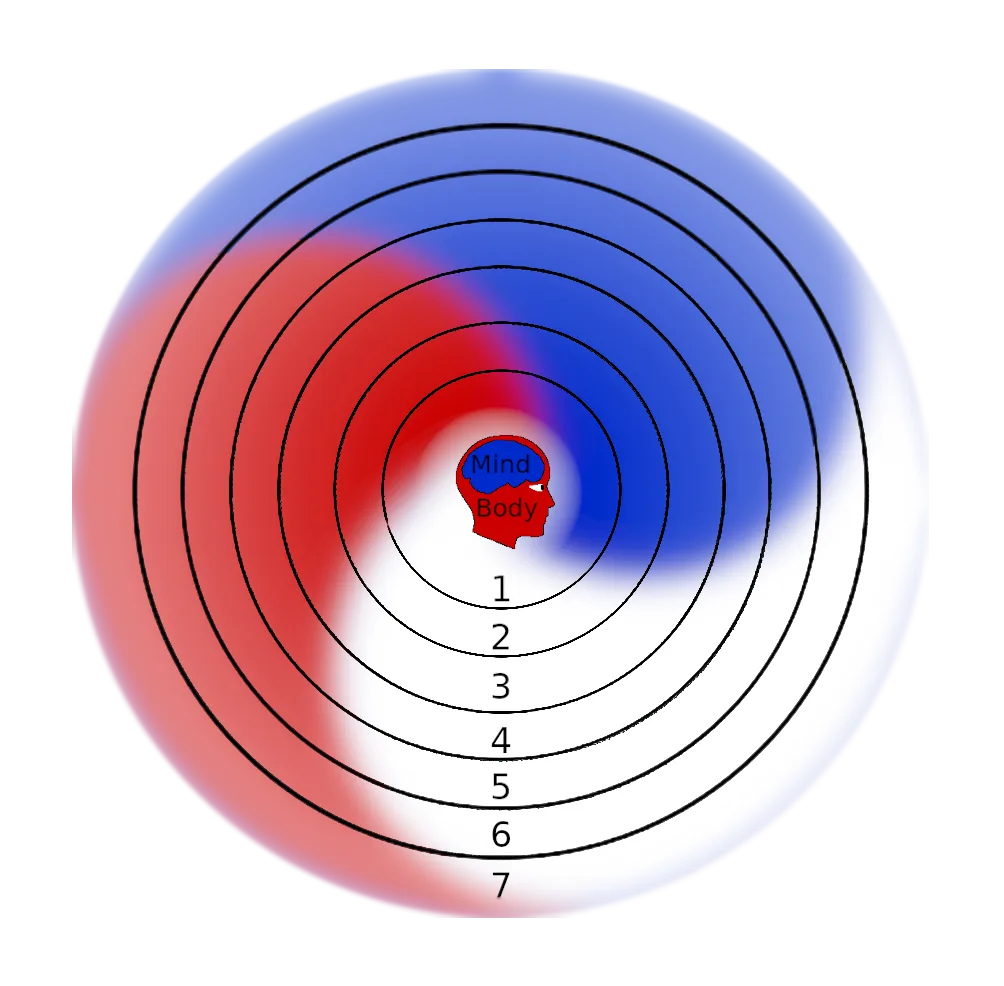
The 7 Spheres of Integration
Whether or not an individual consciously recognizes these spheres, the person exists within broader networks of relationships, institutions, environments, technologies, responsibilities, and conditions. Interaction across these spheres involves the dynamic exchange and reciprocal influence between the Individual and the created, social, environmental, technological, and other systemic realities represented within, or determined to be relevant to, the surrounding System of Context, while the Beyond component preserves openness to relevant realities, relationships, or considerations that may not be fully encompassed by that analytical representation or subject to the same forms of reciprocal influence.
The degree of influence may vary greatly by sphere, circumstance, proximity, relevance, and time, but human life does not unfold in complete isolation. A person may be affected by conditions within these spheres while also contributing—sometimes substantially and sometimes only minimally—to the environments and systems in which that person participates.
When the integrated human person—considered within XSE through the interrelated Aspects of Mind, Body, and Spirit—becomes increasingly fragmented, contradictory, or disordered, the person may experience reduced coherence, diminished operational stability, and greater difficulty sustaining constructive choices and legitimate responsibilities. Because broader relationships, decisions, and systems may depend in part upon the condition and actions of the Individual, significant internal disintegration may also increase vulnerability to instability within systems that person influences or helps sustain.
Conversely, increasing Integrity may strengthen the person’s capacity to remain more truthfully ordered, responsibly adaptive, and constructively engaged across changing conditions. The pressures, uncertainties, responsibilities, and disruptions of life—and, where applicable, leadership—are often unavoidable, and it is especially under such conditions that existing patterns of Integrity, character, strength, courage, judgment, and resilience become visible through action.
Are people of integrity stronger?

Individuals developing greater Integrity may demonstrate forms of strength through increasing coherence, responsible self-direction, and sustained alignment with objective truth, what is genuinely good, legitimate obligations, and constructive Trajectory. Integrity does not eliminate internal struggle or guarantee particular emotional, cognitive, or relational outcomes, but it may support several forms of functional strength.
- Resilience Under Pressure: Greater Integrity may support the capacity to remain responsibly directed during difficulty, uncertainty, temptation, or adversity without allowing those pressures alone to determine behavior or Trajectory.
- Clarity and Judgment: Increasing coherence among understanding, values, attention, responsibilities, and action may reduce some forms of contradiction and support clearer judgment and more deliberate decision-making.
- Morally Responsible Decision-Making: Integrity supports choices that seek alignment not merely with personally held values, but with objective truth, what is genuinely good, legitimate obligations, and Current Reality. This may require courage, restraint, correction of error, or changed action when circumstances warrant.
- Reliable Conduct: Integrity may become visible through increasing consistency between words and actions, commitments and follow-through, and stated convictions and lived behavior. Such consistency should remain adaptable to truth rather than rigidly attached to mistaken prior conclusions.
- Trustworthiness: Truthful communication, accountability, responsible fulfillment of commitments, and appropriate consistency may strengthen the basis for trust in personal, professional, and institutional relationships.
- Constructive Relationships: Integrity may support healthier relational functioning by encouraging honesty, accountability, respect for legitimate responsibilities, appropriate boundaries, and consistency between stated intentions and behavior. Relationships, however, remain influenced by many factors beyond the Integrity of any one individual.
- Personal Accountability: Integrity includes willingness to acknowledge choices and consequences, correct error, accept legitimate responsibility, and make moral correction or repentance where warranted. Accountability can therefore represent a practical expression of increasing Integrity.
- Greater Internal Coherence: As understanding, values, choices, behavior, responsibilities, and long-term Trajectory become more truthfully ordered, a person may experience greater operational coherence and more consistent self-direction. This does not mean the absence of emotional difficulty, uncertainty, or internal conflict.
Strength is multifaceted, and Integrity should not be treated as the sole source or measure of human strength. Courage, resilience, adaptability, patience, compassion, competence, endurance, and other qualities may also express strength in different circumstances. Within XSE, however, True & Optimal Strength is founded on Integrity, because capability that is developed or exercised through falsehood, exploitation, disorder, or destructive means cannot qualify as fully integrated or truly optimal Strength.
Likewise, internal conflict should not automatically be interpreted as disintegration or lack of Integrity. A person can experience substantial internal struggle while remaining committed to truth and what is genuinely good. Within XSE, the greater concern is whether contradiction and fragmentation are becoming persistently reinforced or whether the person is progressively recognizing, evaluating, correcting, and integrating them in accordance with Current Reality.
Integrity is considered a fundamental value in society

Integrity is widely regarded as a fundamental value in society because it supports trust, stability, cooperation, justice, accountability, and long-term human flourishing. When integrity significantly deteriorates, relationships, institutions, systems, and communities may progressively lose coherence, reliability, trust, and functional stability.
In ordinary social and institutional contexts, integrity commonly refers to honesty, reliability, principled conduct, and consistency between what is claimed and what is actually done. Within XSE, the concept is developed more specifically as a Derived Dynamic involving progressively strengthened system-level coherence and integrative unity oriented toward objective truth, what is genuinely good, legitimate obligations, Current Reality, constructive Trajectory, and sustained aligned action over time.
At both the individual and societal level, integrity helps align beliefs, words, decisions, and actions with truth, moral responsibility, and reality.
Integrity, Trust, and Reliability
At its core, integrity involves increasing consistency among what a person understands, values, says, chooses, and does. This consistency helps others develop confidence in the reliability of individuals, organizations, and systems.
When integrity is present, communication becomes more dependable, commitments become more meaningful, and cooperation becomes more sustainable. When integrity is substantially compromised, deception, contradiction, inconsistency, or misrepresentation can weaken trust and progressively undermine relationships and coordinated systems.
Human society depends heavily upon trust-based interaction. Families, friendships, businesses, governments, healthcare systems, legal systems, education, engineering, finance, and leadership structures all rely upon some degree of honesty, consistency, responsibility, and truthful representation in order to function effectively.
When integrity deteriorates within these structures, confusion, corruption, manipulation, distrust, inefficiency, poor coordination, and systemic instability may increase.
Integrity from a Systems Perspective
From a systems perspective, integrity contributes to coherence, reliability, and long-term resilience.
Systems in which integrity is substantially compromised may develop increasing contradiction between:
- stated goals,
- actual conditions,
- communicated information,
- operational behavior,
- responsibilities,
- and real-world outcomes.
These contradictions may contribute to fragmentation, degraded performance, impaired decision-making, loss of trust, or eventual failure.
For example:
- a business that misrepresents financial information may lose credibility and create serious operational or legal consequences,
- an engineer who knowingly disregards relevant safety realities may contribute to unsafe system design,
- a leader who repeatedly acts contrary to stated principles may weaken institutional trust,
- and institutions or communities in which falsehood, distortion, or disregard for reality becomes widespread may experience declining trust, impaired decision-making, weakened accountability, and greater systemic instability.
Integrity, Justice, and Moral Responsibility
Integrity is also closely connected to justice and moral responsibility.
Societies function more constructively when individuals and institutions seek truthful alignment with what is genuinely good and act according to legitimate responsibilities rather than manipulation, deception, exploitation, or self-interest alone.
Integrity strengthens accountability because it concerns not only outcomes, but also the honesty, fairness, responsibility, and consistency of the processes used to produce those outcomes.
A desirable outcome achieved through deception, exploitation, corruption, or disregard for legitimate obligations does not represent the same kind of integrity as an outcome achieved through truthful and responsible means.
Integrity at the Personal Level
At the personal level, Integrity may contribute to greater internal coherence and more consistent self-direction.
Persistent conflict between:
- recognized truth,
- conscience-sensitive judgment,
- stated values,
- chosen commitments,
- and lived action
may contribute to internal contradiction, fragmentation, loss of directional clarity, or reduced operational stability.
Conversely, increasing Integrity may strengthen coherence among understanding, judgment, action, responsibility, purpose, and long-term Trajectory.
Within XSE, this does not mean that a person of Integrity is free from uncertainty, temptation, fear, grief, internal conflict, or error. Rather, Integrity concerns whether the person is becoming more truthfully ordered, more internally integrated, and more capable of correcting contradiction and sustaining constructive action over time.
Integrity Under Adversity
Integrity becomes especially visible under pressure.
Difficulty, uncertainty, temptation, conflict, responsibility, and adversity place demands upon both individuals and systems. Under such conditions, existing patterns of character, judgment, courage, reliability, and Integrity often become more apparent through action.
A person or institution with greater Integrity may be better positioned to:
- maintain principled action,
- preserve truthful communication,
- fulfill legitimate responsibilities,
- resist manipulation or destructive pressure,
- correct error,
- and remain constructively oriented despite changing conditions.
This does not guarantee flawless performance. Rather, Integrity may increase the capacity to remain responsibly aligned with truth and what is genuinely good when circumstances become difficult.
Integrity as a Stabilizing and Integrative Influence
In many ways, integrity functions as a stabilizing and integrative influence within both individuals and societies.
It can help:
- reduce fragmentation,
- strengthen trust,
- reinforce accountability,
- improve reliability,
- support constructive cooperation,
- preserve truthful communication,
- and align decisions and behavior more closely with reality.
Because human flourishing depends in part upon truthful relationships, reliable institutions, legitimate moral order, responsible action, and systems that can adapt coherently to Current Reality, Integrity remains one of the foundational values supporting healthy relationships, sustainable institutions, and constructive human development.
Within XSE, this principle is expressed more specifically through the Derived Dynamic of Integrity: the progressively strengthened coherence, ordered consistency, and integrative unity of the human system in accordance with objective truth, what is genuinely good, legitimate obligations, constructive Trajectory, and sustained aligned action over time.
Integrity as a Derived Dynamic

Integrity is a Derived Dynamic within XSE representing the progressively strengthened system-level coherence, ordered consistency, alignment, and integrative unity of Mind, Body, and Spirit within the human system in accordance with objective truth, what is genuinely good, legitimate obligations, Current Reality, constructive Trajectory, and sustained aligned action over time.
Within XSE, Integrity is not treated merely as:
- honesty alone,
- moral appearance,
- social reputation,
- isolated ethical behavior,
- behavioral consistency by itself,
- internal agreement,
- or conceptual belief detached from lived and operational reality.
Rather, Integrity concerns the degree to which the integrated human person becomes increasingly truthfully ordered, internally coherent, responsibly self-directed, and capable of sustaining action aligned with what is genuinely good.
Integrity therefore involves relationships among:
- the person’s present understanding of truth,
- continuing correction of that understanding toward objective truth,
- values and conscience-sensitive judgment,
- attention,
- choices,
- commitments,
- words and behavior,
- legitimate responsibilities,
- conditioning and reinforcement patterns,
- and long-term Trajectory.
Importantly, internal consistency alone does not establish Integrity. A person may be highly consistent, disciplined, or effective while remaining aligned with falsehood, disordered priorities, exploitation, or a destructive Trajectory. Within XSE, genuine Integrity requires that coherence itself remain oriented toward objective truth, what is genuinely good, legitimate obligations, and Current Reality.
Formally, Integrity is classified within XSE as a Derived Dynamic. It also performs a foundational role within the framework because True & Optimal Strength is founded on Integrity.
As a Derived Dynamic, Integrity may be:
- strengthened,
- weakened,
- stabilized,
- degraded,
- restored,
- or progressively developed
through recursive interaction among relevant Actual and Analytical Factors, conditions, choices, relationships, environments, and feedback over time.
Expanded Explanation
Within XSE, the integrated human person exists within changing conditions and may encounter:
- competing influences,
- conflicting desires,
- environmental pressures,
- attentional fragmentation,
- recursive conditioning,
- destabilizing reinforcement patterns,
- emotional fluctuation,
- uncertainty,
- conflicting responsibilities,
- and competing Trajectory pressures.
These experiences do not themselves indicate a lack of Integrity. Internal struggle, temptation, uncertainty, grief, fear, or conflicting impulses may occur even in a person of substantial Integrity.
The relevant distinction is whether contradiction and fragmentation are being recognized, responsibly evaluated, corrected where appropriate, or increasingly reinforced.
Within XSE, movement toward greater integration may involve:
- increasing coherence,
- ordered consistency,
- truthful orientation,
- appropriate model correction,
- responsible alignment among choices and responsibilities,
- constructive reinforcement,
- and increasingly unified Trajectory direction across Mind, Body, and Spirit.
Conversely, disintegration refers to increasing fragmentation, contradiction, or loss of ordered coherence within the human system. It may involve:
- persistent contradiction,
- operational incoherence,
- destabilizing reinforcement,
- Trajectory drift,
- unresolved or reinforced internal conflict,
- and increasing inconsistency among understanding, attention, values, choices, behavior, responsibilities, and lived direction.
Integrity therefore strengthens not merely as contradiction decreases, but as system-level coherence becomes increasingly aligned with objective truth, what is genuinely good, legitimate obligations, Current Reality, and constructive Trajectory.
Integrity as a Derived Dynamic
Within XSE, Integrity is classified as a Derived Dynamic because it develops through relationships and recursive interaction within the human system and its broader System of Context.
Integrity is not understood as:
- static,
- permanently fixed,
- a single isolated personality trait,
- reducible to one behavior,
- or independent of changing conditions and human choices.
Rather, Integrity may become:
- strengthened,
- weakened,
- stabilized,
- degraded,
- restored,
- or progressively developed
through interaction among factors such as:
- Gateway interaction,
- attentional habits,
- understanding and model correction,
- values and conscience-sensitive judgment,
- behavioral reinforcement,
- Trajectory direction,
- environmental influence,
- relational responsibilities,
- conditioning,
- and broader systems integration.
Thus, Integrity reflects a progressively developing system-level condition of truthful and properly ordered integration rather than a simple binary distinction between a person who “has” or “does not have” integrity.
Integrity and Operational Congruence
Within XSE, one important expression of Integrity is operational congruence.
Operational congruence refers to the degree to which a person’s:
- understanding,
- beliefs,
- values,
- attention,
- emotions,
- choices,
- words,
- behavior,
- responsibilities,
- and long-term Trajectory
operate in increasingly coherent relationship rather than persistent contradiction.
However, operational congruence alone is not sufficient to establish Integrity.
A person could possess substantial internal consistency while operating from:
- false assumptions,
- distorted priorities,
- destructive values,
- exploitative objectives,
- or a harmful Trajectory.
For example, a person may intellectually recognize a legitimate responsibility or what is genuinely good while repeatedly reinforcing behavior that contradicts that understanding. Within XSE, this may represent operational disintegration because understanding, choice, behavior, and Trajectory are moving in conflicting directions.
Conversely, when a person:
- recognizes contradiction,
- seeks more truthful understanding,
- corrects an inaccurate model,
- changes behavior where warranted,
- fulfills legitimate responsibilities,
- and progressively brings action into better alignment with objective truth and the good,
the process may represent a strengthening of Integrity.
Thus, increasing Integrity involves not merely becoming more consistent, but becoming increasingly:
- coherent,
- truth-oriented,
- properly ordered,
- reality-responsive,
- responsibly adaptive,
- and capable of sustained constructive action.
Integrity and Mind, Body, and Spirit
Within XSE, Mind, Body, and Spirit are the three interrelated Aspects of the Human within the Actual Factors. They provide complementary perspectives for examining the integrated human person and are not treated as three isolated independent systems.
Integrity concerns increasing coordination and proper ordering across these Aspects.
As understanding, attention, values, choices, behavior, embodiment, commitments, emotional weighting, and orientational direction become increasingly coherent and properly aligned, the human system may develop greater:
- operational stability,
- responsible self-direction,
- resilience,
- attentional stability,
- adaptive consistency,
- and Trajectory coherence.
Conversely, progressive disintegration may contribute to:
- increased contradiction,
- attentional fragmentation,
- inconsistent self-direction,
- destabilizing reinforcement patterns,
- weakened follow-through,
- and reduced operational coherence.
These outcomes are not automatic or guaranteed. They depend upon the interaction of the person, circumstances, choices, environments, responsibilities, available knowledge, and other relevant Factors within Current Reality.
Integrity and the ICC–ECC Relationship
Within the XSE analytical model, the Integrative Convergence Center (ICC) and Executive Control Center (ECC) provide constructs for examining different but related aspects of human integration and action.
The ICC may be used within XSE analysis to examine convergence among matters such as:
- values,
- attachments,
- meaning,
- identity orientation,
- conscience-sensitive judgment,
- and deeper Trajectory direction.
The ECC may be used within XSE analysis to examine matters such as:
- attentional regulation,
- prioritization,
- Gateway Guarding,
- executive implementation,
- inhibition or restraint,
- and sustained operational action.
These constructs should not be interpreted as claims that XSE has identified separate literal psychological or neurological structures that mechanically govern the person.
Rather, they provide analytical ways of examining whether deeper orientation and executive implementation are becoming increasingly coherent.
Integrity may be strengthened as the functions represented through the ICC and ECC become increasingly aligned with one another and properly ordered toward:
- objective truth,
- what is genuinely good,
- legitimate responsibilities,
- Current Reality,
- and constructive Trajectory.
Greater ICC–ECC coherence may therefore support:
- more consistent implementation,
- reduced contradiction,
- sustained aligned action,
- improved Trajectory stability,
- and stronger operational coherence.
Integrity and Gateway Guarding
Within XSE, Gateway Guarding is relevant to Integrity because repeated Inputs and Outputs through the Mind, Body, and Spirit Gateways may influence:
- attention,
- understanding,
- conditioning,
- emotional weighting,
- habits,
- reinforcement patterns,
- behavior,
- and long-term Trajectory.
Constructive Gateway Guarding may support:
- more deliberate attention,
- truthful understanding,
- appropriate boundaries,
- constructive conditioning,
- behavioral consistency,
- and coherent Trajectory development.
Conversely, poorly governed Gateway interaction may contribute to:
- attentional fragmentation,
- contradictory reinforcement,
- destabilizing habits,
- distorted Inputs,
- weakened self-direction,
- and reduced operational coherence.
Gateway Guarding does not mechanically determine Integrity. Rather, it is one of multiple XSE considerations through which the Sustaining Systems Engineer may examine how recurring Inputs, Outputs, environments, and reinforcement patterns interact with the broader human system over time.
Integrity, Freedom, and Willpower
Within XSE, increasing Integrity may support the responsible development and exercise of:
- Freedom,
- disciplined choice,
- willpower,
- resilience,
- and Trajectory stability.
Greater integration may reduce persistent internal contradiction and make it easier for the person to sustain choices that correspond with recognized responsibilities and constructive direction.
As operational coherence strengthens, the person may develop greater capacity for:
- attentional governance,
- disciplined follow-through,
- responsible self-regulation,
- sustained aligned action,
- resistance to degrading conditioning,
- and constructive exercise of Freedom.
Freedom within this context is not merely the absence of restraint. It also involves increasing capacity to make and sustain responsible choices without being unnecessarily dominated by fragmentation, falsehood, destructive conditioning, or uncontrolled pressure.
Integrity therefore may function as an important stabilizing and freedom-supporting Derived Dynamic within the human system.
Integrity as an Integrative and Anti-Fragmentational Dynamic
Within XSE, Integrity may be described as an integrative and anti-fragmentational Derived Dynamic because its development is associated with increasing order, coherence, and unity rather than progressive contradiction and fragmentation.
Fragmentation within the human system may appear through patterns such as:
- persistent contradiction,
- destabilization,
- destructive reinforcement,
- degraded attentional governance,
- inconsistent behavior,
- unresolved conflict between recognized truth and lived action,
- and weakening Trajectory coherence.
Integrity may help counter these tendencies through increasing:
- truthful orientation,
- ordered coherence,
- responsible adaptation,
- behavioral consistency,
- attentional stability,
- correction of error,
- and sustained constructive Trajectory.
This use of anti-fragmentational is a systems description of increasing coherence and should not be interpreted as a literal application of physical thermodynamic entropy to the human person.
Relationship to Luxxacation
Within XSE, Luxxacation—Take Time, Build Strength, Rise Above—provides a high-level recursive structure through which Integrity development may be examined and supported.
| Luxxacation Element | Relationship to Integrity |
|---|---|
| Take Time | supports awareness, truthful assessment, model correction, clarification of responsibilities, and Trajectory evaluation |
| Build Strength | supports disciplined practice, constructive conditioning, resilience, consistency, and responsible implementation |
| Rise Above | supports increasingly sustained constructive action, adaptation, and integrative advancement |
Through repeated application of these elements, the human system may progressively strengthen:
- operational coherence,
- Gateway Guarding,
- attentional stability,
- constructive behavioral reinforcement,
- ICC–ECC alignment,
- Trajectory consistency,
- and broader systems integration.
Luxxacation does not mechanically produce Integrity or guarantee particular outcomes. Rather, it provides an XSE structure for Take Time, Build Strength, and Rise Above through continuing assessment, action, feedback, and correction.
Constraints and Realism
Within XSE, Integrity develops within Current Reality, including:
- biological realities,
- physical limitations,
- stress,
- environmental pressures,
- conditioning,
- suffering,
- attentional limitations,
- incomplete information,
- uncertainty,
- legitimate dependencies,
- relational obligations,
- and complex systems interaction.
XSE therefore does not treat Integrity as:
- perfection,
- flawless consistency,
- complete self-mastery,
- invulnerability,
- freedom from error,
- or elimination of human struggle.
A person may experience:
- temptation,
- fatigue,
- fear,
- grief,
- uncertainty,
- internal conflict,
- limitation,
- or failure
while still possessing substantial Integrity.
The relevant question is whether the person is becoming more truthfully ordered, more internally integrated, less fragmented, more responsive to Current Reality, and more capable of sustaining action in accordance with what is genuinely good and legitimately required.
Integrity may also require change. When stronger evidence, corrected understanding, changed circumstances, or legitimate responsibilities reveal that an earlier belief or course of action was mistaken, maintaining Integrity may require:
- correction of error,
- moral correction or repentance where warranted,
- revised understanding,
- changed behavior,
- or altered Trajectory.
Thus, adaptability to truth is part of Integrity rather than a violation of consistency.
Investigative and Philosophical Considerations
Within XSE, Integrity may be examined through observable relationships among:
- understanding,
- attention,
- choice,
- behavior,
- reinforcement,
- responsibility,
- environmental interaction,
- and Trajectory.
It is therefore treated as:
- systems-oriented,
- recursively adaptive,
- developmentally relevant,
- and investigable within appropriate limits.
However, XSE does not claim that Integrity:
- fully explains moral reality,
- exhaustively defines the human person,
- reduces conscience or spirituality to systems mechanics,
- eliminates human mystery,
- guarantees flawless behavior,
- or makes every aspect of Integrity objectively measurable.
Mind, Body, and Spirit are analytical Aspects used within XSE to examine the integrated human person, not an exhaustive explanation of the person.
Likewise, systems models remain representations. They may require correction as evidence, understanding, legitimate Sources, and Current Reality develop.
Within these limits, Integrity functions as a Derived Dynamic describing the progressively strengthened truthful ordering and integrative coherence of the human system over time.
Concise Summary
Integrity is a Derived Dynamic within XSE representing the progressively strengthened system-level coherence, ordered consistency, alignment, and integrative unity of Mind, Body, and Spirit within the human system in accordance with objective truth, what is genuinely good, legitimate obligations, Current Reality, constructive Trajectory, and sustained aligned action over time.