
The Human Body
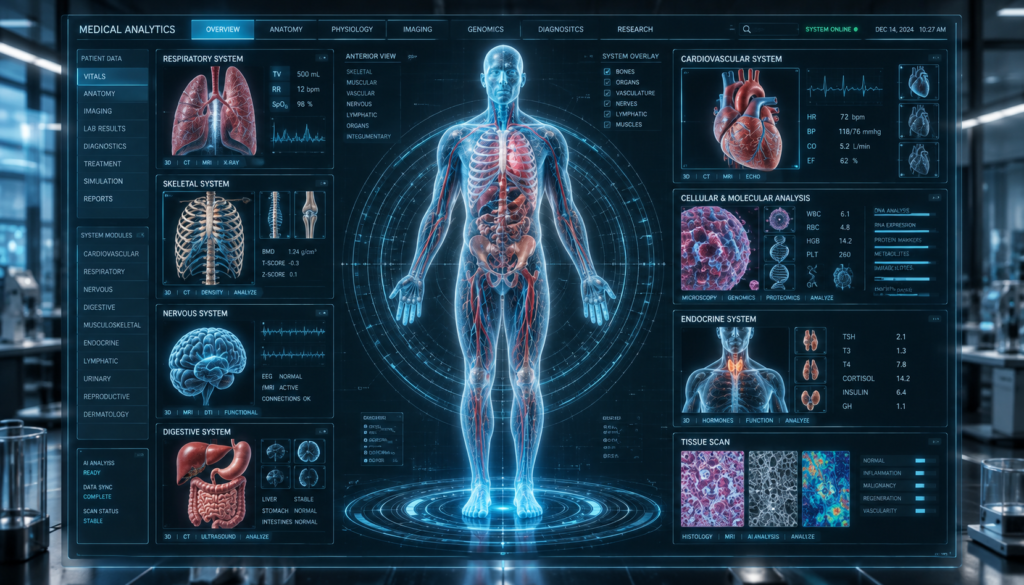
Human body (noun):
The organized biological structure of the human organism, composed of cells, tissues, and organs functioning together as an integrated system to sustain life, growth, and reproduction.
Think there’s more to you than that? Correct, perhaps even more than you bargained for…
So What is the Body?
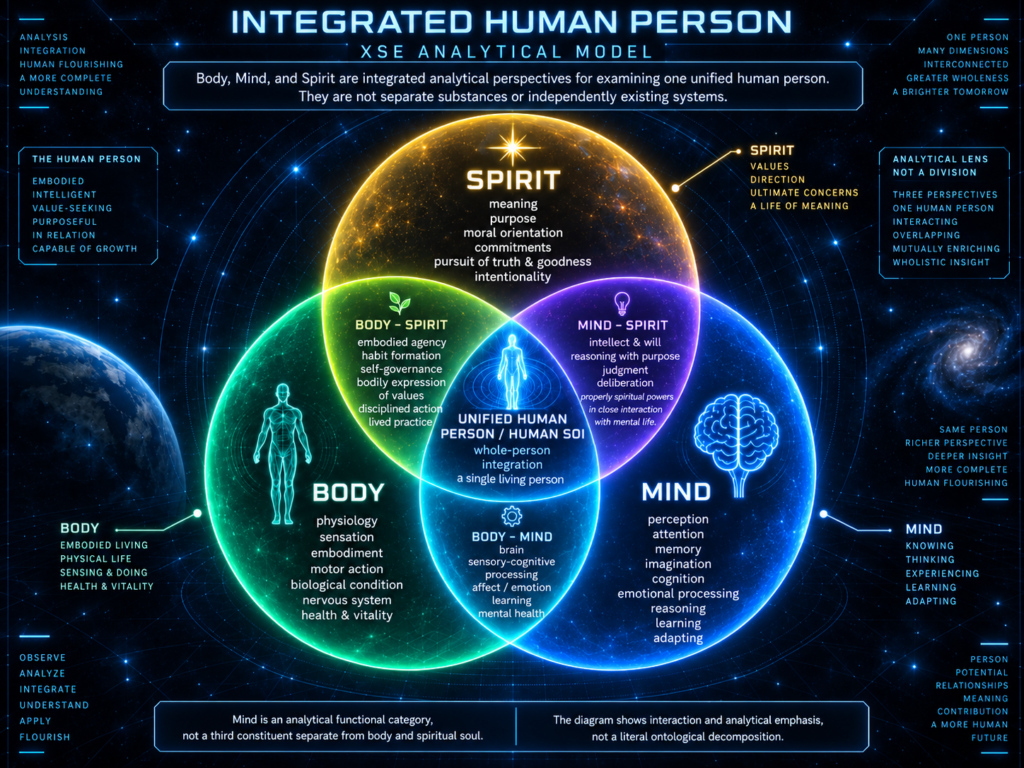
In XSE, Mind, Body, and Spirit are the three formal Human Aspects among XSE’s 20 Actual Factors. They are used as integrated analytical perspectives for examining one unified human person; they are not three separate substances, natures, or independently existing systems, nor are they themselves members of XSE’s 20 Analytical Factors.
The human person is a profound unity of corporeal body and spiritual soul. Mind is used by XSE as a functional category for examining cognitive and psychological operations of the embodied person, not as a third constituent separate from body and soul.
Body
In XSE, Body refers to the corporeal and biological reality of the human person.
The human body is not merely an instrument, container, or machine occupied by the soul, but an integral dimension of the one human person and shares in the dignity proper to that person.
Animated by the spiritual soul, through the body the human person senses, acts, communicates, and interacts corporeally with the material world.
Bodily health, limitations, capacities, habits, environment, injury, fatigue, and other physical conditions can therefore influence the functioning and development of the whole person.
Within XSE, Body is therefore an Actual Factor used as an analytical perspective for examining the corporeal and biological conditions of the human SOI without reducing the person to biology, physical capability, performance, or bodily state.
Spirit
In XSE, the Spirit Aspect refers to the human person considered in relation to the spiritual soul and its properly spiritual capacities, orientation, and activity.
The human spiritual soul is the immaterial, rational, and immortal principle of life of the person and is the form of the body, such that body and soul constitute one human nature and one human person.
Through the spiritual powers of intellect and will, the human person is capable of knowing truth, recognizing and choosing the good, acting freely, and directing action toward a proper end. Human beings are naturally ordered toward truth and goodness, yet intellect, will, desires, habits, and conduct can become disordered.
Reason, reflection, education, disciplined formation, and moral development can assist natural human growth, correction, and the development of virtue. XSE addresses these natural dimensions of human development and does not claim to explain or produce supernatural life or perfection.
Within XSE, the Spirit Aspect is therefore an Actual Factor used as an analytical perspective on the person’s spiritual and orientational life, not an exhaustive model or mechanistic explanation of the soul.
Mind
In XSE, Mind is the Human Aspect used to examine cognitive and psychological operations of the human person, including attention, perception, memory, imagination, understanding, reasoning, judgment, learning, and related mental processes.
Mind is not a separate substance alongside Body and Spirit.
Intellectual activity belongs to the unified human person and proceeds through the spiritual power of intellect, while many cognitive and psychological operations also involve the person’s sensory, bodily, neurological, emotional, and experiential life.
Within XSE, Mind is therefore an Actual Factor used as an analytical perspective for examining mental and cognitive functioning without implying that the human person’s intellectual or psychological life can be exhaustively reduced to biological processes or to a systems model.
Formal XSE classification: Mind, Body, and Spirit are Actual Factors.
Analytical use: they function as integrated Human Aspects through which XSE examines the unified human person.
Human ontology: one human person constituted in the unity of body and spiritual soul.
XSE analysis: Mind, Body, and Spirit provide distinct but integrated perspectives without claiming to exhaustively define or explain the human person.
Systems understanding of the Body

The Body Aspect
The Body Aspect concerns the corporeal and biological reality of the unified human person. The body is not an autonomous subsystem, container, machine, or instrument occupied by the soul. Rather, the human person exists in the profound unity of body and spiritual soul, with the soul as the substantial form of the body.
Biologically, the human organism exhibits highly coordinated development and regulation from the beginning of its existence. Its functioning involves genetics, cellular organization, metabolism, neural activity, endocrine regulation, immune function, sensation, movement, and many other interacting processes.
Within XSE, the Body Aspect examines how bodily conditions contribute to the person’s ability to sense, move, act, communicate through bodily expression, maintain physiological regulation, and interact with the material environment. Bodily condition also interacts closely with attention, memory, emotion, cognition, habits, decision-making, and the exercise of human agency.
Through bodily existence, the human person acts in time and space, communicates, participates in relationships, performs work, fulfills responsibilities, and engages directly with the material world. Bodily expression—including posture, movement, speech, facial expression, and other forms of action—may communicate aspects of the person’s emotions, intentions, habits, and engagement with others.
Within XSE, the body is not modeled merely as an operational interface through which mind or spirit acts as though either were a separate agent. The whole human person acts bodily, and bodily conditions form part of the circumstances in which perception, judgment, choice, behavior, relationship, and development occur.
Health, illness, pain, fatigue, injury, disability, stress, nutrition, sleep, physical conditioning, neurological function, and other bodily conditions may influence the person’s functioning and Trajectory. Within XSE, these conditions are not automatically interpreted as evidence of moral, psychological, or spiritual disorder. Their causes and effects require appropriate investigation across the relevant Human Aspects and other XSE Factors.
Although XSE analyzes biological structures and processes, it does not reduce the human body to a collection of cellular, biochemical, neurological, or mechanical components. These processes belong to the living bodily reality of the unified human person. Within XSE, the body is not treated as intrinsically opposed to human or spiritual flourishing; rather, it is integral to human action, relationship, responsibility, development, and embodied participation in reality.
From fertilization, which XSE treats as the beginning of the human SOI, a new living human organism begins a continuous and internally coordinated developmental trajectory. Across continuous development, its biological structures and capacities change while remaining those of the same living human organism.
Thus, within XSE, the Body Aspect provides a disciplined analytical perspective on the corporeal, biological, sensory, physiological, expressive, and embodied activity of the one human person, while preserving the person’s unity and avoiding reduction of the body either to a machine or to a mere instrument of the mind or spirit.
Origin of the Body

Origin of the Body
The biological development of the human body begins at fertilization, when the reproductive cells of the mother and father unite and a new living human organism begins its own continuous developmental trajectory.
From this beginning, the organism possesses a genetic constitution distinct from either parent and develops through internally coordinated biological processes involving cell division, differentiation, gene regulation, signaling, metabolism, growth, and the progressive formation of tissues, organs, and bodily systems.
Across continuous development, the embryo, fetus, infant, child, adolescent, and adult represent successive developmental stages of the same living human organism, whose bodily structures and capacities change substantially over time while biological continuity is preserved.
Within XSE, fertilization is treated as the beginning of the human SOI. The Body Aspect therefore applies across the entire human life cycle, even though particular bodily structures, functions, and capacities emerge, mature, change, diminish, or become temporarily inactive at different stages of development.
The body also reflects the biological individuality and vulnerability of the person. Its development and condition may be influenced by genetics, prenatal environment, nutrition, illness, injury, activity, habits, relationships, environmental exposures, medical care, aging, and many other interacting conditions.
XSE does not treat the developing body as a material subsystem inhabited or controlled by an independently existing mind or spirit. Rather, bodily development is the development of the one embodied human person existing in the profound unity of body and spiritual soul.
Biology can investigate the material processes by which the human organism originates, develops, functions, and changes. It does not, by biological measurement alone, experimentally detect or explain the spiritual soul. XSE therefore preserves the distinction between empirical biological description and the philosophical understanding of the human person.
Thus, XSE grounds the Body Aspect in the bodily reality of the living human organism beginning at fertilization and developing continuously thereafter, while examining that bodily reality as integral to the life and development of the unified human person.
Whole-Person Health, Positive Emotion, Mindfulness, Lifestyle, and Environment
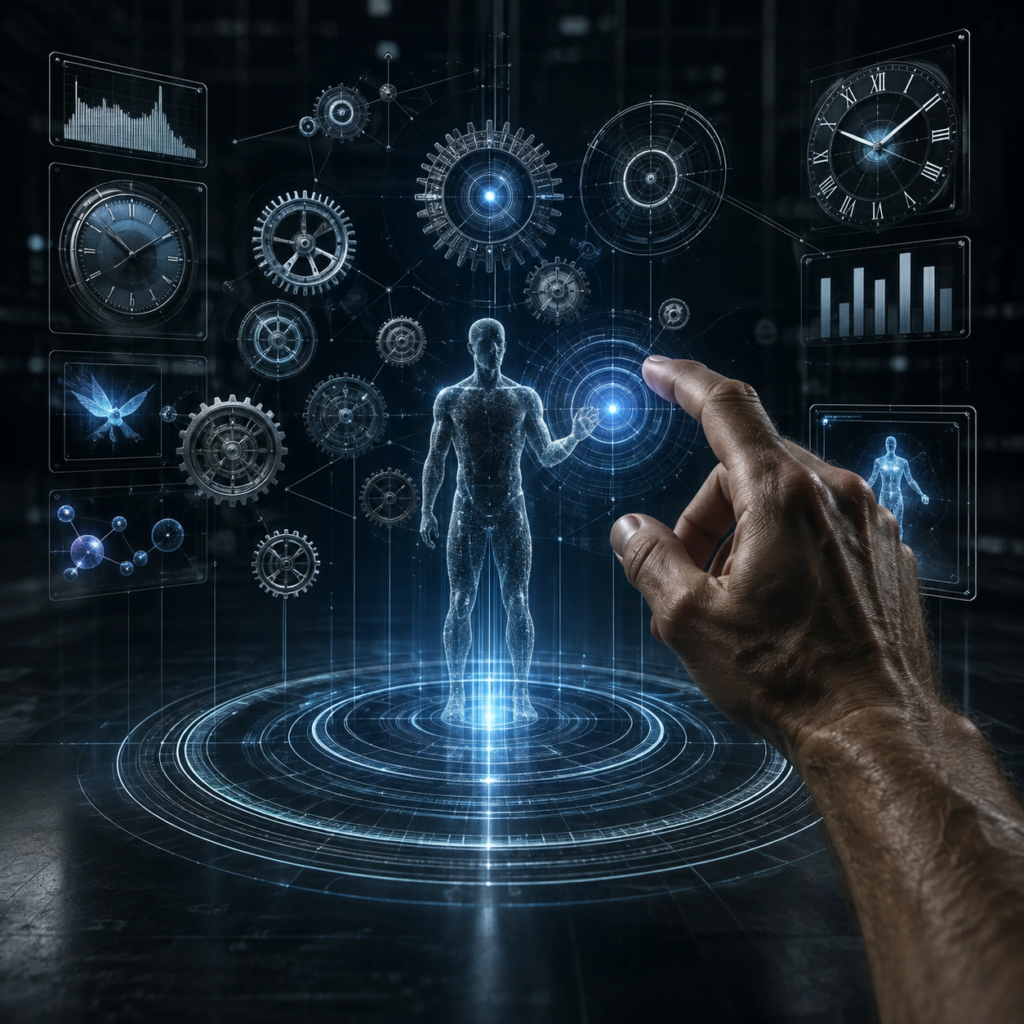
Human health and functioning are influenced by many interacting conditions, including bodily health, psychological functioning, relationships, nutrition, physical activity, environment, habits, meaning, purpose, and other Factors.
Within XSE, these conditions are examined in relation to the unified human person rather than treated as independent systems or as interchangeable dimensions of health.
The Body Aspect examines corporeal and biological conditions. The Mind Aspect examines cognitive, psychological, emotional, experiential, learning, and related mental activity. The Spirit Aspect concerns the person in relation to the spiritual soul and its properly spiritual powers, orientation, and activity.
Positive emotion, psychological well-being, mindfulness, nutrition, physical activity, relationships, and environmental conditions may affect human functioning, but none of these by itself provides a complete measure of health, human worth, Integrity, or whole-person flourishing.
Positive Emotional States and Psychological Functioning
Positive emotions such as joy, interest, contentment, and love have been studied in relation to attention, behavior, coping, social connection, and the development of psychological resources.
Fredrickson’s broaden-and-build theory of positive emotions proposes that some positive emotional states can temporarily broaden a person’s range of thoughts and possible actions, potentially encouraging exploration, play, creativity, social connection, and other forms of engagement. Over time, such experiences may contribute to the development of psychological, intellectual, social, or physical resources.
Fredrickson (2004) — The Broaden-and-Build Theory of Positive Emotions — PubMed
Within XSE, these findings concern primarily emotional and psychological functioning examined through the Mind Aspect, together with possible behavioral, relational, and bodily effects.
Positive emotion is not equated with the Spirit Aspect.
A person may experience joy, hope, interest, or psychological well-being without those states establishing spiritual health, moral correctness, objective truth, or Integrity. Likewise, sadness, grief, fear, or distress do not by themselves indicate psychological failure, moral disorder, or spiritual deficiency.
Positive emotion can support human functioning, but emotional state is not a direct measure of truth, goodness, or spiritual condition.
Mindfulness and Psychological Functioning
Mindfulness and meditation have been studied in relation to stress, attention, emotional regulation, psychological distress, cognitive functioning, and neurological activity.
A major review by Tang, Hölzel, and Posner (2015) examined the neuroscience of mindfulness meditation and discussed findings involving attention regulation, emotion regulation, self-awareness, and associated brain systems. The authors also identified substantial methodological limitations and unresolved questions concerning underlying mechanisms.
Tang, Hölzel & Posner (2015) — The Neuroscience of Mindfulness Meditation — PubMed
Within XSE, mindfulness-based practices are examined according to their specific cognitive, psychological, behavioral, experiential, and physiological effects.
Mindfulness is not automatically classified as a spiritual practice, nor are measurable psychological or neurological effects treated as evidence of spiritual development.
Some forms of mindfulness practice may be useful or well tolerated for some individuals and circumstances, while outcomes can vary according to the practice, person, context, duration, health condition, and other Factors.
Within XSE, a practice that is helpful or well tolerated for one person is not assumed to be appropriate, beneficial, or without adverse effects for every person.
Positive Mental Health and Mental Disorder
Within XSE, positive psychological functioning and mental disorder are not treated simply as opposite ends of a single continuum.
The presence of mental-health symptoms or a mental disorder does not necessarily eliminate positive psychological functioning. A person experiencing mental-health difficulty may still retain areas of life satisfaction, purpose, positive emotion, relationships, functioning, Strength, and psychological well-being.
Keyes et al. (2012) examined positive mental health among college students and found that levels of positive mental health provided information beyond mental-disorder screening in predicting suicidal behavior and academic impairment. Among students both with and without positive screens for mental disorders, adverse outcomes were lowest among those classified as flourishing and highest among those classified as languishing.
Keyes et al. (2012) — Positive Mental Health and Mental Illness — PubMed
These findings support the distinction between mental-health symptoms or disorder and the broader condition of psychological functioning and well-being.
They do not establish that maintaining a “positive mindset” prevents mental illness or that positive emotion alone provides adequate treatment for psychological disorders.
Within XSE, mental health is examined in context and is not reduced either to diagnosis or to subjective happiness.
Nutrition and Bodily Functioning
Nutrition contributes to the biological conditions necessary for growth, metabolism, neurological functioning, repair, physiological regulation, and other bodily processes.
Nutritional status may also interact with cognition, mood, energy, attention, sleep, and behavior.
Within XSE, nutrition is examined principally through the Body Aspect, while its cognitive and psychological effects may also be relevant to the Mind Aspect and other Factors.
Nutrition is one contributor within a broader configuration of health and functioning. It is not treated as a universal means of cognitive optimization, disease prevention, moral discipline, or whole-person flourishing.
A nutritious dietary pattern may support biological conditions relevant to health and cognition, but within XSE, dietary quality is not treated as a measure of Intelligence, Integrity, spiritual condition, or personal worth.
Physical Activity and Human Functioning
Physical activity can contribute to cardiovascular health, metabolic functioning, mobility, physical capacity, neurological health, sleep, mood, and aspects of cognitive functioning.
Its effects vary according to the person’s age, health, disability, injury status, physical capacity, type and amount of activity, environment, and other circumstances.
Within XSE, physical activity is examined principally through the Body Aspect, while recognizing its possible interactions with psychological functioning, cognition, relationships, habits, responsibilities, and the person’s broader Trajectory.
Exercise is not treated as a universal treatment, a guaranteed optimization mechanism, or proof of psychological, moral, or spiritual health.
Environment and Health
The physical and social environment can also influence bodily and psychological functioning.
Relevant environmental conditions may include:
air and water quality;
noise;
temperature;
housing;
exposure to environmental hazards;
accessibility;
opportunities for movement and recreation;
access to natural or green spaces;
safety;
transportation;
social conditions;
and access to appropriate resources and services.
Access to supportive environments and natural spaces may provide opportunities for physical activity, restoration, recreation, social interaction, and reduced exposure to some environmental stressors.
Environmental effects vary substantially among individuals and circumstances, and no single environmental feature guarantees physical or psychological well-being.
Within XSE, environment is therefore examined as a relevant contributor to Current Reality rather than as a background condition assumed to be neutral.
Interaction Without Conflation
Nutrition, physical activity, emotion, psychological well-being, mindfulness, relationships, and environment can interact.
For example:
poor sleep may influence mood, cognition, appetite, and activity;
chronic illness may affect emotional functioning and participation in relationships;
stress may affect behavior, sleep, eating, and bodily functioning;
physical activity may interact with mood, cognition, sleep, and social participation;
supportive relationships may influence coping and health-related behavior;
environmental conditions may facilitate or constrain movement, rest, safety, and social engagement.
These relationships illustrate the importance of whole-person analysis without collapsing distinct phenomena into one another.
A psychological effect remains a psychological finding.
A physiological effect remains a biological finding.
A social effect remains a relational finding.
A spiritual claim requires evaluation through the appropriate philosophical or theological Sources.
Within XSE, no single measured outcome is treated as a complete indicator of whole-person condition.
Positive Emotion Is Not the Spirit Aspect
Within XSE, the phrase “positive spirit” is not used as a technical description of the Spirit Aspect when referring merely to optimism, happiness, enthusiasm, or positive emotion.
Such states are examined primarily through the Mind Aspect insofar as they concern emotional and psychological functioning.
The Spirit Aspect concerns the human person in relation to the spiritual soul and its properly spiritual powers—especially intellect and will—together with meaning, purpose, moral orientation, commitments, and orientation toward objective truth and what is genuinely good.
Positive psychological states may interact with these dimensions of the person’s life, but they are not equivalent to them.
Within XSE, psychological distress, grief, fear, sadness, or difficulty experiencing positive emotion are not by themselves interpreted as evidence of spiritual disorder.
Feeling positive is not the same as being spiritually sound, just as experiencing distress is not proof of spiritual disorder.
Professional and Scope Boundaries
Information concerning psychological functioning, mindfulness, nutrition, physical activity, lifestyle, environmental conditions, and health-related outcomes may be useful for educational and systems-analysis purposes. However, individualized health concerns may require assessment within the appropriate professional scope.
XSE uses information concerning psychological functioning, mindfulness, nutrition, physical activity, lifestyle, environmental conditions, and health-related outcomes for educational and systems-analysis purposes. It does not diagnose or treat medical or mental-health conditions, provide psychotherapy, prescribe medical treatment or medical nutrition therapy, or replace individualized evaluation or care from appropriately qualified and, where applicable, licensed professionals.
When individualized assessment is required, the relevance and appropriateness of particular health, nutrition, physical-activity, psychological, or environmental considerations are evaluated within the appropriate professional scope.
XSE Interpretation
Within XSE, human health and functioning occur within a complex configuration of bodily, psychological, relational, behavioral, environmental, and other conditions affecting the one unified human person.
Nutrition, physical activity, psychological functioning, positive emotion, mindfulness practices, supportive relationships, and environmental conditions may each contribute to particular areas of health or functioning.
None provides a complete measure of the person.
XSE therefore examines these conditions according to their actual effects, evidence, context, interactions, and limits without reducing whole-person flourishing to physical health, psychological comfort, lifestyle performance, environmental advantage, or any single measurable outcome.
Nor does XSE infer spiritual condition, moral worth, or Integrity merely from favorable health, emotional, psychological, behavioral, or lifestyle indicators.
The objective is not simply to maximize positive feelings or optimize isolated health variables, but to understand the interacting conditions that influence the person’s Current Reality, functioning, Strength, Integrity, and Trajectory while preserving the unity and dignity of the whole human person.
Good company supports health

Social Influence, Supportive Relationships, and Healthy Habits
The people with whom a person regularly interacts can influence behavior, habits, expectations, motivation, coping, perceived norms, and health-related decisions.
Within XSE, relationships are therefore relevant to the person’s broader Current Reality and Trajectory. Supportive relationships may help strengthen constructive behavior, persistence, learning, accountability, and adaptation, while unhealthy or destructive relationships may reinforce harmful habits, distorted expectations, poor judgment, or patterns inconsistent with the person’s well-being and genuine good.
Social influence is not inherently beneficial simply because it is encouraging, popular, emotionally positive, or widely accepted within a group.
The influence of a relationship is evaluated not merely by how supportive it feels, but by what it actually encourages, reinforces, and produces in the person’s life.
Behavioral Modeling
People frequently learn through observation.
Seeing others consistently engage in behaviors such as physical activity, nutritious eating, appropriate rest, responsible stress management, disciplined work, or constructive coping may provide examples of how those behaviors can be incorporated into ordinary life.
Observed behavior can also influence expectations concerning what is normal, attainable, acceptable, or worthwhile.
Within XSE, behavioral modeling is not treated as automatic imitation. A person remains capable of evaluating observed behavior rather than merely reproducing it.
The fact that another person successfully practices a behavior does not by itself establish that the same behavior, intensity, method, or goal is appropriate for everyone.
Social Support
Relationships may provide several forms of support relevant to human functioning.
These can include:
- emotional support, such as encouragement, empathy, companionship, and appropriate reassurance;
- informational support, such as useful knowledge, experience, advice, or referral to appropriate Sources;
- practical support, such as assistance with responsibilities, transportation, access, or participation in activities;
- feedback and accountability, which may help a person recognize patterns, maintain commitments, or reconsider ineffective behavior;
- and relational stability, which may provide connection and support during periods of difficulty or change.
The value of support depends partly upon its quality and orientation.
Advice can be sincere but mistaken. Encouragement can reinforce either constructive or destructive behavior. Accountability can support responsibility or become coercive. Belonging can strengthen a person while also creating pressure to conform.
Within XSE, social support is therefore examined in relation to truth, actual consequences, appropriate boundaries, responsibility, and genuine good.
Psychological Functioning and Coping
Supportive relationships may interact with psychological functioning by influencing stress, motivation, perceived support, emotional experience, coping, confidence, and persistence.
A person facing difficulty may benefit from relationships that provide perspective, encouragement, practical assistance, honest feedback, or continued companionship.
These effects vary across individuals and circumstances.
Within XSE, psychologically resilient or constructively oriented people are not described simply as “mentally strong” in contrast with people experiencing anxiety, depression, trauma, grief, or other psychological difficulties.
Mental-health difficulty does not imply weakness of character, and emotional positivity is not equivalent to sound psychological functioning.
Constructive support can strengthen coping and action without requiring the person to appear continually positive or unaffected by difficulty.
Self-Efficacy and Observed Capability
The people around a person may also influence self-efficacy—the person’s belief concerning the ability to perform a particular behavior or accomplish a particular task.
Observing others persist through difficulty, develop competence, recover from setbacks, or successfully establish a habit may help make similar action appear more attainable.
Encouragement and successful personal experience may further strengthen confidence in a specific capability.
Within XSE, self-efficacy is distinguished from truth or actual competence.
A person can feel capable and still lack necessary skill, preparation, information, or resources. Likewise, a person may possess substantial capability while underestimating it.
Confidence can influence action, but confidence does not by itself establish capability or correctness.
Goals and Social Influence
Goals can also be influenced by relationships and social environments.
When people repeatedly observe others pursuing particular goals, they may become more attentive to those goals, perceive them as more important or attainable, or begin incorporating similar priorities into their own behavior.
This can support constructive change.
It can also produce conformity.
A social group may normalize:
- responsible health behavior;
- learning;
- discipline;
- service;
- appropriate physical activity;
- or other constructive practices.
The same social processes can also normalize:
- substance misuse;
- neglect of health;
- destructive risk-taking;
- dishonesty;
- unhealthy comparison;
- excessive consumption;
- distorted beliefs;
- or other harmful behavior.
Within XSE, social adoption of a goal does not establish that the goal itself is sound.
The goal remains subject to evaluation against Current Reality, objective truth, relevant responsibilities, appropriate constraints, and what is genuinely good.
Social Norms and Group Culture
Every social environment develops expectations concerning behavior.
Some are explicit. Others emerge through repeated observation, approval, disapproval, language, habits, shared activities, and informal expectations.
These norms can make particular behaviors easier or harder to maintain.
For example, a group may regularly organize activities involving movement, outdoor recreation, shared meals, learning, service, or mutual accountability. Such patterns may create conditions that support particular habits.
Other environments may make constructive behavior more difficult through persistent pressure, ridicule, misinformation, unhealthy expectations, or conflicting norms.
Within XSE, group norms are therefore treated as social influences rather than standards of truth.
What a group normalizes may influence behavior, but social acceptance does not determine whether a belief, value, goal, or practice is true or genuinely good.
Relationships and the Human Aspects
Social relationships can interact with conditions examined through multiple Human Aspects.
Through the Mind Aspect, relationships may influence emotion, attention, expectations, interpretation, motivation, coping, learning, and behavior.
Through the Body Aspect, relationships and shared environments may influence sleep, activity, nutrition, stress exposure, health-related behavior, and other bodily conditions.
Relationships may also intersect with the Spirit Aspect when they involve meaning, commitments, moral judgment, purpose, truth, responsibility, or the exercise of intellect and will.
These interactions do not make other people controllers of the person.
The whole human person continues to understand, judge, choose, act, form habits, accept influence, and resist influence, while questions of responsibility must be considered in light of the person’s actual knowledge, freedom, intention, circumstances, and capacity.
Constructive Relationships and Healthy Habits
Relationships that support healthy and constructive behavior may include people who:
- encourage sound habits without coercion;
- provide truthful and proportionate feedback;
- respect legitimate boundaries;
- model responsibility and self-discipline;
- support appropriate care when needed;
- encourage persistence without demanding perfection;
- help distinguish setbacks from failure;
- support goals that are genuinely beneficial;
- challenge destructive behavior when appropriate;
- and remain willing to correct their own errors.
The value of such relationships does not arise merely from optimism or emotional positivity.
It arises from the quality of the relationship and the degree to which it supports truthful understanding, responsible freedom, constructive behavior, genuine good, and favorable Trajectory.
XSE Interpretation
Within XSE, the company a person keeps is an important part of the social environment surrounding the human SOI.
Relationships can influence habits, expectations, motivation, behavior, coping, perceived norms, goals, and health-related decisions.
That influence can be constructive, neutral, mixed, or destructive.
XSE therefore does not equate social approval with truth, positivity with psychological health, or conformity with Integrity.
Rather, relationships are examined according to their actual influence on the person’s Current Reality, judgment, behavior, responsibilities, Strength, Integrity, and Trajectory.
Constructive relationships can make good habits easier to establish and sustain, but the ultimate standard is not whether a group approves of a behavior. It is whether the influence helps the person become more accurately aligned with reality, more capable of responsible action, and better oriented toward what is true and genuinely good.
You affect others. Others affect you.

This influence is supported by a variety of psychological and social mechanisms facilitating the adoption and maintenance of behaviors conducive to health.
Behavioral Modeling and Social Support: The presence of social support has been linked to improved physical health outcomes, better immune function, lower blood pressures, and reduced mortality. Interventions that increase network size or perceived support have shown efficacy in various areas, including weight loss, substance abuse, and improved parenting skills (Hogan, Linden, & Najarian, 2002). Additionally, social support interventions can be designed to build social skills, facilitating the creation of supportive networks that encourage health-promoting behaviors.
Impact on Mental Health: The types of social support provided, whether directive or nondirective, can affect health behaviors and outcomes. Nondirective support, which is more about offering empathy and understanding without pushing for specific actions, has been associated with greater intake of fruits and vegetables and lower alcohol use. This indicates that the quality and approach of social support can influence health behaviors in significant ways (Stewart, Gabriele, & Fisher, 2012).
Social Engagement and Physical Health: Social engagement, as part of social support, plays a crucial role in health, particularly among older adults. Studies have shown that social engagement is associated with better physical health outcomes, emphasizing the importance of integrating social support into health promotion efforts across the lifespan (Cherry et al., 2013).
Comprehensive Health Outcomes: Social support not only influences specific health behaviors but also contributes to a broader spectrum of health outcomes. The effective implementation of social support interventions requires understanding the mechanisms through which support affects health, including behavioral and physiological pathways, to tailor interventions that address both mental and physical health needs comprehensively (Elder, Ayala, & Harris, 1999).
In conclusion, the company we keep and the social support we receive play critical roles in influencing our health behaviors and overall well-being. Positive and mentally strong individuals can inspire us, offer valuable support, and create an environment conducive to health, making it easier to maintain healthy habits. The evidence underscores the necessity of incorporating social support into holistic health promotion strategies.
The condition of the body can affect the mind and spirit

Enduring a physically challenged state can have significant impact on a person’s mental and spiritual well-being. The interconnectedness of physical, mental, and spiritual health is supported by various studies:
Physical Activity and Mental Well-Being: Regular physical activity has been shown to be effective in treating clinical depression and anxiety, improving self-esteem, mood states, and cognitive function, especially in older adults. This suggests that moderate exercise can be a viable means of enhancing mental well-being (Fox, 1999).
Religion, Spirituality, and Physical Health in Cancer Patients: A meta-analysis found that higher levels of religious/spiritual engagement in cancer patients are associated with better patient-reported physical health. This underscores the importance of addressing patients’ spiritual needs as part of comprehensive cancer care (Jim et al., 2015).
Religious Involvement, Spirituality, and Clinical Practice: Research suggests that religious involvement and spirituality are linked to better health outcomes, including greater longevity, reduced anxiety, and less depression. Addressing spiritual needs may enhance recovery from illness, highlighting the need for health professionals to consider patients’ religious and spiritual needs (Mueller, Plevak, & Rummans, 2001).
Spiritual Well-Being and Depressive Symptoms: Spirituality’s positive effects on mental health might be explained by its effect on cognitive-emotional functioning. For instance, greater spiritual well-being is related to more optimism, less pessimism, and fewer depressive symptoms, indicating spirituality’s potential role in enhancing mental and emotional resilience.
Physical Fitness, Health, and Resilience: Physical fitness confers resilience by inducing positive psychological and physiological benefits, protecting against the adverse effects of stress, and preventing many chronic diseases. This includes blunting stress reactivity and reducing excessive inflammation, which are essential for mental and physical health (Silverman & Deuster, 2014).
These studies illustrate the complex interplay between physical health and mental/spiritual well-being, suggesting that interventions aimed at improving physical health can have beneficial effects on mental and spiritual health as well.
The Mind and Spirit affect the Body

The condition of the mind and spirit can have profound effects on the body, influencing physical health, well-being, and overall quality of life. Here’s how:
Stress Response: The mind and spirit play a central role in the body’s stress response system. When individuals experience stress, anxiety, or negative emotions, the brain activates the release of stress hormones such as cortisol and adrenaline. Prolonged or chronic stress can disrupt physiological processes, weaken the immune system, increase inflammation, and contribute to various health problems such as cardiovascular disease, gastrointestinal disorders, and compromised immune function.
Mind-Body Connection: The mind and body are intimately connected through complex neurobiological pathways and signaling mechanisms. Positive emotions, thoughts, and beliefs can promote physical health and well-being by reducing stress, enhancing immune function, and promoting healing and recovery. Conversely, negative emotions, maladaptive thoughts, and unhealthy beliefs can contribute to illness, pain, and dysfunction by activating stress responses and disrupting physiological balance.
Psychosomatic Effects: The mind can influence physical health through psychosomatic effects, where psychological factors contribute to the onset, course, or severity of physical symptoms or conditions. For example, stress, anxiety, depression, or trauma can exacerbate symptoms of chronic pain, digestive disorders, autoimmune diseases, or skin conditions. Conversely, interventions targeting psychological well-being, such as cognitive-behavioral therapy, mindfulness, or relaxation techniques, can improve physical symptoms and outcomes.
Lifestyle Factors: The condition of the mind and spirit can influence lifestyle behaviors that impact physical health and well-being. Positive mental and emotional states, such as optimism, resilience, and self-efficacy, are associated with healthier lifestyle choices, including regular exercise, balanced nutrition, adequate sleep, and stress management practices. Conversely, negative mental and emotional states, such as depression, apathy, or hopelessness, may lead to unhealthy behaviors such as sedentary lifestyle, poor dietary habits, substance abuse, or self-destructive behaviors.
Placebo and Nocebo Effects: The mind’s influence on the body is evident in placebo and nocebo effects, where individuals experience physiological changes or symptom improvement based on their beliefs, expectations, or perceptions. Positive expectations and beliefs can enhance treatment outcomes and recovery, even when receiving inert or sham treatments (placebo). Conversely, negative expectations and beliefs can worsen symptoms or side effects, even with genuine medical interventions (nocebo).
Spiritual Well-being: The condition of the spirit, encompassing aspects such as purpose, meaning, values, and connectedness, can also influence physical health and well-being. Individuals with a strong sense of spiritual well-being may experience greater resilience, coping resources, and adaptive responses to stress, illness, or adversity. Spiritual practices such as prayer, meditation, gratitude, and forgiveness have been associated with positive health outcomes, including lower blood pressure, reduced stress levels, and improved immune function.
In summary, the condition of the mind and spirit profoundly affects the body through various pathways, including stress responses, neurobiological mechanisms, lifestyle behaviors, psychosomatic effects, placebo and nocebo effects, and spiritual well-being. Recognizing and addressing mental and spiritual factors is essential for promoting holistic health and well-being, encompassing physical, emotional, social, and spiritual dimensions of human experience.
The Mind and Spirit are integral to the Body

Stress Response and Mind-Body Connection:
- Mindfulness-based stress reduction (MBSR) programs, which focus on developing awareness of moment-to-moment experiences, significantly improve physical and psychological health outcomes in a variety of clinical and nonclinical populations. These improvements include reductions in stress, anxiety, depression, and improvements in physical symptoms and well-being (Grossman, Niemann, Schmidt, & Walach, 2004).
- The neuroscience of mindfulness meditation supports these findings by demonstrating its beneficial effects on health, cognitive performance, and the underlying brain areas and networks mediating these effects (Tang, Hölzel, & Posner, 2015).
Psychosomatic Effects and Lifestyle Factors:
- Research confirms the clinical wisdom that mental health affects physical health, suggesting that psychological treatment can improve not only psychological symptoms but also have an independent effect on physical health and disease (Bambling, 2006).
- Lifestyle behaviors and stress management programs, like “Taking Care of You: Body, Mind, Spirit,” show significant improvements in stress levels and health behaviors, emphasizing the role of holistic wellness concepts in health maintenance and disease prevention (Vetter-Smith, Massey, Rellergert, & Wissmann, 2014).
Placebo and Nocebo Effects:
- The neurobiological mechanisms of the placebo effect reveal that psychological states can activate mechanisms similar to those activated by drugs, highlighting the significant role of the therapeutic act’s psychosocial context on the patient’s brain and health (Colloca & Benedetti, 2005).
Spiritual Well-being:
- Spirituality and healthy lifestyle behaviors have stress counter-balancing effects on well-being, with spirituality, physical activities, and healthy diet contributing to higher subjective physical well-being in older adults (Boswell, Kahana, & Dilworth-Anderson, 2006).
In summary, the interplay between mind, body, and spirit is critical for holistic health and well-being. This involves mechanisms such as stress response modulation, lifestyle factors, psychosomatic effects, and the influence of spirituality, all of which can have protective or detrimental effects on physical health. Addressing mental and spiritual factors is essential for promoting overall health.
Spiritual and emotional health can enhance physical health

Research has increasingly focused on the positive impacts of healthy spiritual and emotional states on physical health, revealing a multifaceted relationship that enhances well-being and quality of life through various pathways:
Direct Positive Effects on Physical Health: Positive emotional states have been shown to directly improve physical well-being, possibly through enhancing immune system function. This relationship is supported by research indicating that positive affect can directly affect physiology, promote healthy behaviors, and elicit social support, all of which contribute to better physical health (Salovey, Rothman, Detweiler, & Steward, 2000).
Spirituality as a Facilitator of Better Health Outcomes: Spirituality is thought to benefit physical health and mortality, with mechanisms including effects on immune function, stress reduction, and promotion of health-enhancing behaviors. This complex relationship suggests that spiritual beliefs and practices can have a tangible impact on physical health outcomes (Dyer, 2007).
Role in Mental and Physical Health: The influence of religion and spirituality on health is complex, with an increasingly recognized role in promoting both mental and physical health. This includes mechanisms such as stress buffering, community support, and the promotion of positive lifestyles (Seybold & Hill, 2001).
Buffering Effects on Stress and Adjustment: Spirituality has been found to moderate the adverse effects of stress on both emotional and physical adjustment, suggesting that spirituality can serve as a protective factor in stress management and overall well-being (Kim & Seidlitz, 2002).
Positive Emotions and Health: An upward-spiral dynamic between positive emotions and physical health has been proposed, with increased positive emotions leading to improved physical health outcomes. This relationship is mediated by factors such as social connections, highlighting the interconnectedness of emotional well-being, social support, and physical health (Kok et al., 2013).
Impact on Mental Health and Physical Health: The impact of spirituality on mental health has also been noted as controversial; however, there is evidence supporting its beneficial effects on emotional adjustment, hope, purpose, and coping with life’s difficulties. This, in turn, can have a positive impact on physical health by promoting healthy behaviors and enhancing resilience (Makwana, 2012).
These studies collectively underscore the significant and positive impact of healthy spiritual and emotional states on physical health, highlighting various mechanisms such as direct physiological effects, stress buffering, promotion of healthy behaviors, and social support. These findings advocate for a holistic approach to health care that recognizes the importance of emotional and spiritual well-being in promoting physical health.
And good mental health helps take care of your body

Physical Activity as a Contributor to Mental and Physical Health: A comprehensive review emphasized that physical activity significantly enhances mood states, reduces symptoms of anxiety and depression, and improves self-esteem, indicating a strong correlation between mental well-being and physical health outcomes (Fox, 1999).
Exercise and Mental Health: Physical exercise is advocated as a viable treatment for depression and anxiety, with studies showing that regular physical activity can have profound effects on improving mental well-being, which in turn contributes to better physical health outcomes (Paluska & Schwenk, 2000).
Mental Health’s Impact on Physical Well-being: The relationship between mental and physical health is bidirectional, with good mental health promoting physical health through improved lifestyle choices, reduced risk of disease, and better management of stress and physical well-being (Ohrnberger, Fichera, & Sutton, 2017).
Workplace Physical Activity Interventions and Mental Health: Studies have found that workplace physical activity interventions can significantly reduce depressive symptoms and anxiety, demonstrating the positive impact of good mental health on overall physical health and quality of life (Chu et al., 2014).
Analysis of Physical Exercise and Mental Health Relationship: Research underscores the critical role of physical exercise in enhancing mental health, which subsequently impacts physical health positively. This relationship is explored through the lens of emotion, cognition, and social adaptation, further supported by physiological mechanisms and psychoanalytic theory (Gu, 2023).
These studies collectively affirm that maintaining a state of good mental health, through regular physical activity or other means, significantly contributes to improved physical health outcomes. The positive effects span across reducing risks for chronic diseases, enhancing mood and cognitive functions, and promoting overall well-being.